


Lobuche Peak Climbing

Trip Duration
14 Days
Group Sizes
2-16 People
Transportation
Flight
Destination
Nepal
Max. Altitude
6,119m. / 20,075ft.
Nature of Trip
Climbing
Best Season
Sep-Nov, Mar-May
Activities
- Climbing
- Trekking
- Sightseeing

Difficulty
Challenging
Meals
- Breakfast
- Lunch
- Dinner

Start & End Point
Kathmandu
Accommodation
- Teahouse
- Tented Camp
Trip Highlights
- Mark your steps at the Lobuche Peak summit (6,119 m.)
- Get to know the culture, hospitality and value’s of Sherpa’s
- Explore Namche Bazar – a vibrant city in the Everest region.
- Striking views of Ama Dablam, Mt. Everest, Lhotse and Nuptse
- Get the panoramic views from Kala Patthar (5,555 m.)
- Get a chance to see the wildlife animals & flora & fauna at Sagarmatha National park.
- Walk through the rhododendron forests.
- Explore monasteries, gomaps and chortens
- Admire the memorial site at Thukla Pass.
- Visit several elegant settlements and charming villages of Khumbu region.
Overview of Lobuche Peak Climbing
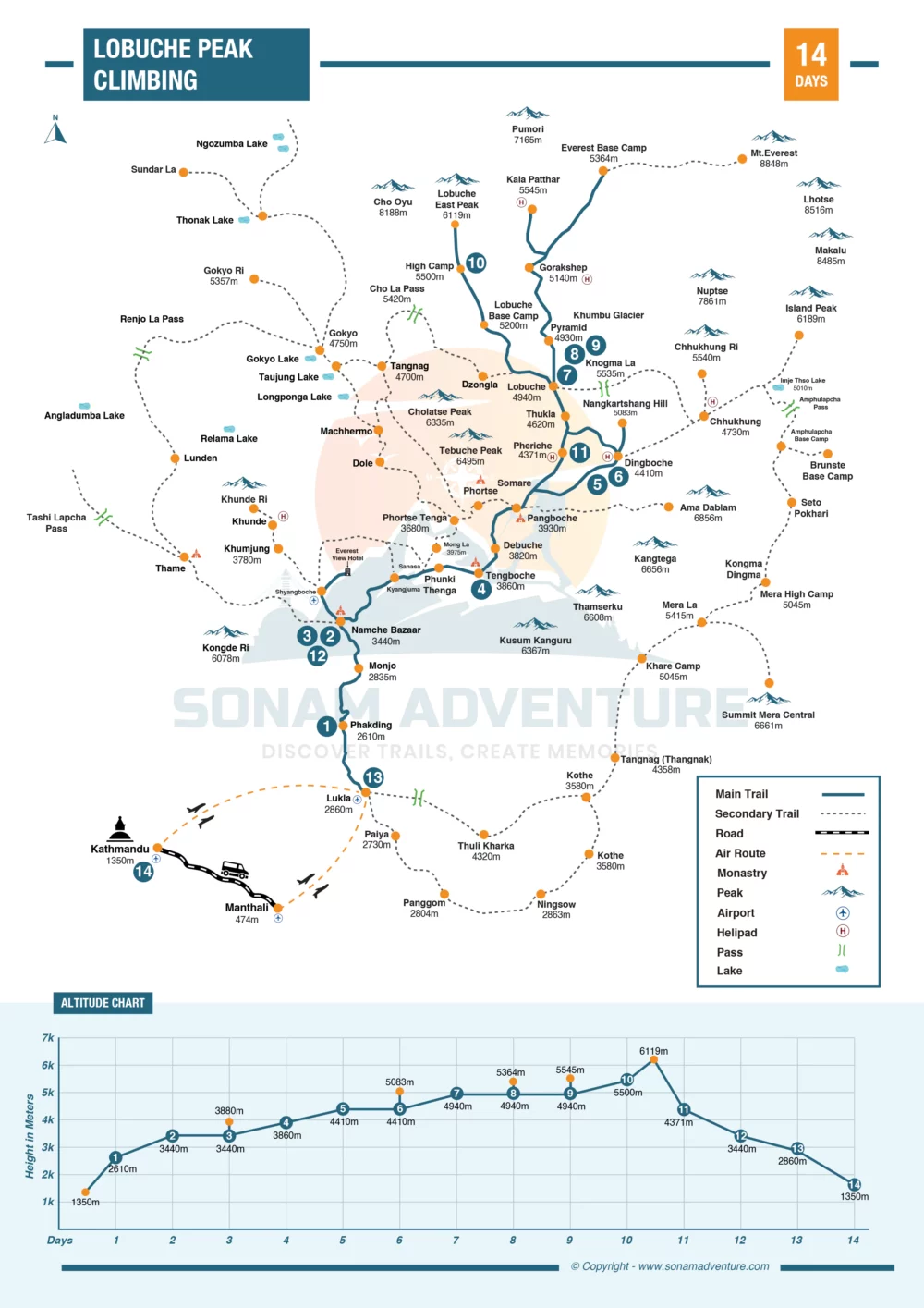
The Lobuche Peak (6,119 m) climbing is a 14-day amazing and adventurous trek in the Himalayas. The popular expedition takes you to the heart of Himalayas. This beautiful journey takes you to away from crowded and chaotic environment.
It is one of the most demanding treks of Nepal. During your journey, you’ll be able to witness the mountains like Mt. Everest (8849 m), Ama Dablam (6,812m), Lhotse (8,516m), Nuptse (7,861m) and other surrounding peaks.
The trek begins from the Lukla which is a starting point of the Everest trekking region. From there, you’ll visit several iconic places of Khumbu region. Furthermore, you will also experiences unique culture and hospitality of Sherpa’s. Aside from this, you’ll also able to explore several monasteries, gompas and chortens.
Lobuche Peak climbing is challenging but equally rewarding. From the top of the summit, you’ll have panoramic and breathtaking views of the iconic mountains and Khumbu valley.
Itinerary of Lobuche Peak Climbing
Day 01: Fly to Lukla and Trek to Phakding
We’ll take an early morning flight from Kathmandu. It takes around 30-35 min to reach Lukla. After reaching there, we’ll have lunch and rest for a while. Upon that, our trek begins. By following the Dudhkoshi River, passing through lush forests and charming villages, we’ll reach the Sherpa settlement Phakding. We’ll have a night stay there.

Duration
3-4 hrs
Accommodation
LodgeMeals
Breakfast, Lunch & Dinner
Max Altitude
2651mDay 02: Phakding to Namche Bazaar
This is the second day of Lobuche Peak climbing. After having an early morning breakfast, our trek begins. The trail is approximately 10 kilometers which we have to cover in 6 hrs.
The trek will be moderately challenging. However, we will be overjoyed by the magnificent views of the mountains of Thamserku and Kangtega.
We’ll cover the elevation of approximately 830 m. At the end of the day, we’ll reach Namche Bazar. We have an overnight stay at a luxurious resort.
Duration
6 hrs trekAccommodation
LodgeMeals
Breakfast, Lunch & DinnerMax Altitude
3438mDay 03: Namche Bazaar Acclimatization
Today is the rest day for us. By tomorrow, we are gaining a comprehensively high altitude. Therefore, we’ll acclimatize today. Namche is also a wonderful place to explore. You may wander around the streets of this place. You may buy gifts and souvenirs for your family. Furthermore, we may also visit monasteries and chortens of this place. We’ll also hike to Hotel Everest view. From the top of this place, you’ll get the striking views of Mount Everest, Lhotse, Nuptse and other surrounding mountains.
Accommodation
LodgeMeals
Breakfast, Lunch & DinnerDay 04: Namche to Tengboche
This is the third day of the journey. We’ll trek to Tengboche a beautiful village famous for its monastery.
It is a significant portion of the Lobuche peak climbing that takes around 5-6 hrs to conclude the trek. The trail follows a mix of ascents and descents passing through the Sherpa village.
During the journey, we’ll get the remarkable views of Ama Dablam, Thamserku and other mountains. Furthermore, we’ll be glad to see the amazing rhododendron and pine forests. As the sun goes down, we’ll reach Tengboche and stay in a tea house.
Duration
5-6 hrs trekAccommodation
LodgeMeals
Breakfast, Lunch & DinnerMax Altitude
3860mDay 05: Trek to Dingboche
On day fifth, we’ll leave behind Tengboche and forward our steps for the next destination. The path follows the alpine forest till we arrive at Deboche. We then cross the Imja Khola River via suspension bridges.
During our trek, we’ll see the gigantic and flawless views of Mt. Ama Dablam. Then we will all continue the path of Imja Valley and ascend towards the settlement of Pangboche. After passing some tree lines, we’ll reach Dingboche. From here, you’ll have striking views of Nuptse, Lhotse and other mountains.
Duration
7 hrsAccommodation
LodgeMeals
Breakfast, Lunch & DinnerMax Altitude
4350mDay 06: Dingboche Acclimatization
This is a crucial and significant day for us. We are on the sixth day of the Lobuche Peak climbing. Today will rest and acclimatize our bodies to prevent altitude sickness.
After having breakfast, we will head for the trip to Nagarjuna Peak. Initially, we will ascend steep slopes with rocks and stones, which make the trek quite challenging.
After reaching the summit, we’ll get the striking views of Makalu, Lhotse, Ama Dablam, Nuptse and several other mountains. Before the sun goes down, we’ll trek back to Dingboche.
Accommodation
LodgeMeals
Breakfast, Lunch & DinnerDay 07: Trek to Lobuche
On day 7, the trails will be moderate compared to another day. We have to conquer the elevation of 4,910 m today. It takes around 8 hr to reach the destination.
The trail includes steeper climbing followed by the rough terrains. You’ll walk through the Trekkers Aid Post, Pheriche, before landing your steps at Lobuche. We’ll have an overnight stay and dinner at the tea house.
Duration
8 hrs trekAccommodation
TeahouseMeals
Breakfast, Lunch & DinnerMax Altitude
4910mDay 08: Trek to GorakShep and Everest Base Camp, returns to Lobuche
Today, we’ll have a fantastic day of the entire journey. We’ll have a longer walk on day eight. After having breakfast, we’ll hike to Gorakshep by following steeper ascents and descents, rocky terrain and icy moraines. It takes around 2-3 hrs to reach Gorakshep from Lobuche.
After reaching Gorakshep, we’ll mark our steps towards Everest Base Camp. From the top of the camp, you’ll get incredible views of Mount, Everest, Lhotse, Nuptse, Pumori and Changtse. After making a lot of memories and taking photographs, we’ll head down to the Lobuche for an overnight stay.
Duration
2-3 hrs trekAccommodation
LodgeMeals
Breakfast, Lunch & DinnerMax Altitude
5164mDay 09: Hike to Kala Patthar from Lobuche
Today, we’ll have the best day of our journey. We’ll hike to Kala Patthar, which has an elevation of 5545 meters. We depart early in the morning from our stay house. It is worth it to reach the top of the Kalapatthar to get the stunning views of Sagarmatha, Mt. Pumori, Ama Dablam, Khumbu Glacier, and Lhotse. After spending quality time and making memories, we’ll return to our tea house.
Accommodation
TeahouseMeals
Breakfast, Lunch & DinnerMax Altitude
5545mDay 10: Trek to Lobuche High Camp
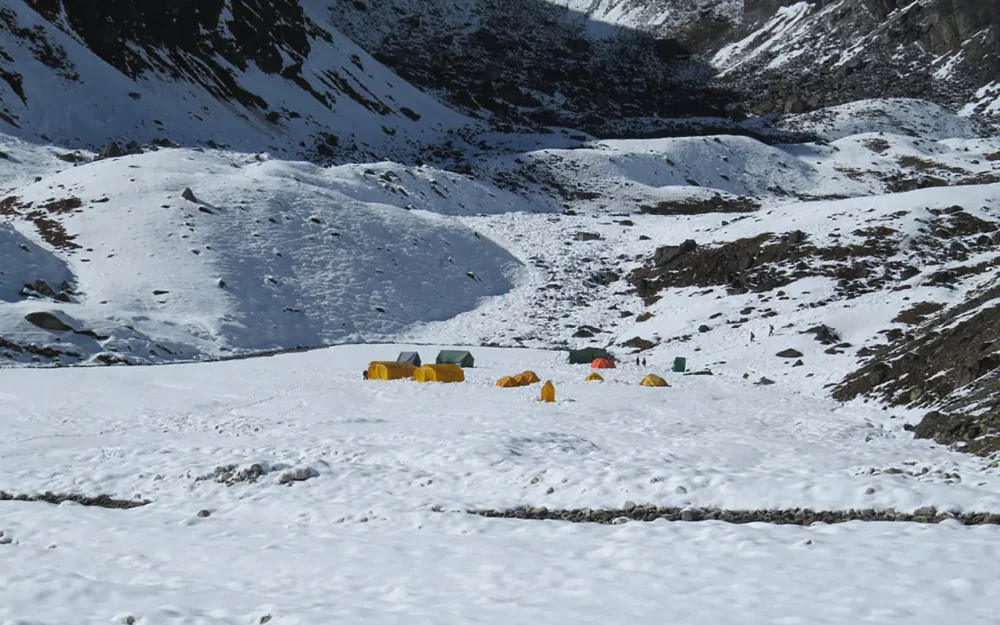
The day 10th is one of the most significant portions of Lobuche Peak climbing. Today, we hike to Lobuche trek, which has an elevation of 5,420 meters. Once again, our alarm went off; following an early breakfast, we were ready for the Lobuche High Camp.
The 10th-day trail is going to be steeper and rougher, along with lateral moraine. Therefore, we should slowly move our feet with the help of trekking poles or crampons. After hiking for a couple of hours, we’ll reach base camp. We’ll stay in a tented camp.
Duration
5 hrs trekAccommodation
Tented CampMeals
Breakfast, Lunch & DinnerMax Altitude
5420mDay 11: Lobuche East Summit and trek down to Pheriche
The day 11 is challenging but equally rewarding. Today, we’ll mark our steps on Lobuche East Summit that has an elevation of 6,119 m.
We’ll start our day before sunrise, as we have to cover 9 hours of total hiking. Further, we have to reach the summit before 12 because the strong winds are going to create problems for us.
Today’s paths will be snowy, steep, and technical, and we have to conquer this day with fixed ropes.
Upon reaching the summit, we’ll have flawless views of Mt. Everest, Nuptse, Lhotse, Thamserku, Ama Dablam, and Cholatse. After spending some time, we’ll descend to Pheriche.
Duration
9 hrs trekAccommodation
LodgeMeals
Breakfast, Lunch & DinnerMax Altitude
6119mDay 12: Trek from Pheriche to Namche
The trek from Pheriche to Namche is a downhill trek, which takes approximately 6-7 hrs. Today journey involves descending from 4,270 meters to 3,440 meters.
Throughout the trek, you’ll get the scenic views of rhododendron and juniper forests. After crossing the Dudhkoshi River via suspension bridge, you’ll reach the Namche.
Duration
6-7 hrs trekAccommodation
LodgeMeals
Breakfast, Lunch & DinnerDay 13: Namche Bazar to Lukla
Finally, we are on the last day of our trek. Hope you have enjoyed the trek. After an early morning breakfast, we’ll start our trek. The trek covers a distance of 17 kilometers.
After walking for 6-7 hours and following the stone steps and suspension bridges, we’ll reach Lukla.
After reaching here, you may relax and have a delicious dinner in a hotel.
Duration
6-7 hrs trekAccommodation
LodgeMeals
Breakfast, Lunch & DinnerMax Altitude
2860mDay 14: Fly to Kathmandu
I hope you have been enjoying the trip. The adventure is not over yet. You’ll get aerial views of stunning mountains, snow-capped peaks, and charming villages during your flight from Lukla to Kathmandu.
After reaching Kathmandu, our representative will drive you to the hotel. Meanwhile, in the late afternoon and evening, you may visit the UNSECO sites of Kathmandu which include Pashupati Nath, Swayambhu Nath, Kathmandu Durbar Square and several other places.
Accommodation
HotelMax Altitude
1400mTrip Information - Good to Know
What is the difficulty level of Lobuche Peak Climbing?
Lobuche Peak trek is regarded as moderately challenging. The climb requires both mountaineering skills and a good level of fitness. It’s a high-altitude trekking above 6,100 meters. The climbers have to use the equipment like crampons and ice axes.
One has to travel through snowy and icy slopes. The steeper section requires a lot of strength and endurance. The east side of climbing especially demands physical fitness and mountaineering abilities.
Altitude sickness will be a major concern for the trekkers. Further, uncertain weather conditions may be difficult.
Not only physical endurance; your mental strength is equally important to reach the summit of the Lobuche.
Lobuche Peak climbing is accomplishable for the practiced trekkers. However, the beginner recommended an experienced trek guide.
How will be my day & trip – Lobuche Peak Climbing
Undoubtedly, the two weeks of Lobuche Climb is one of the most adventurous treks in Nepal. We at Sonam Adventure ensure your tour will be perfect and amazing.
Your adventurous journey will start from Lukla. Lately, we’ll explore places like Namche, Dingboche, Tengboche, Phortse and several other iconic places. On Day 10, we’ll hike to Lobuche High Camp. Similarly, on the eleventh day, we mark our steps at the summit of Lobuche (6,119 m)
After starting your trip, each day will be everlasting, unforgettable and flawless. Every day will be filled with new experiences of adventure. You’ll be overjoyed by seeing the sky touching mountains, diverse landscapes, rhododendron forests and wildlife animals.
Our day begins with an early morning breakfast. Then our trek continues. After hiking for some hours, we’ll have lunch by enjoying nature. As the sun goes down, we’ll get into the tea house.
Is Lobuche Peak climbing possible for the beginners?
Lobuche peak climbing is merely a difficult task; but not impossible. If you have a well-prepared body and a good level of fitness; then this trek is possible for beginners as well.
If you are a beginner and passionate about trekking, the Sonam Adventure invites you to this phenomenal trip. The 14-day Lobuche peak starts with an easy-to-moderate walk and then you have to undergo with strenuous hike.
You have to hike 5-6 hours per day for two weeks. It can be tedious. However, we also acclimatize during the trek. The most important aspects, we have experienced team members who assist you anytime during the trekking. Start jogging, cardiovascular activity, exercising, and swimming at least 5-6 weeks before your trip. It will energize and balance your body’s energy during the trek.
Preparations of Lobuche Peak Climbing
The 14-day Lobuche Peak Climbing is challenging but equally rewarding. The trek takes you to the depths of the Himalayas with an elevation of 6,119 meters.
To accomplish the thrilling and adventurous trek, you should make a plan & implement it properly. You better take part in activities like cardiovascular training, swimming, running and jogging at least 5-6 weeks before the trip. Furthermore, you may carry a bag pack for 2-3 hours in the morning and evening. It helps you to build endurance, energy and stamina during the trek.
Make sure you have all the training equipment and prepare all your gear before the trek. Additionally, Travel insurance plays a vital role during your trekking.
(Note: Avoid trekking if you have any severe health issues.)
Best time to explore Lobuche
Usually Nepal has 4 seasons: Spring, Autumn, Winter & Monsoon. Lobuche trek is not a short trek. It is a two weeks long journey. Therefore, you better choose an appropriate time to enjoy your trek.
Spring Season (March-May) – Spring is a peak season for the trekker’s. During this time there are mild temperatures and longer days. Furthermore, you will cherish by seeing the blossoming rhododendrons and flora & fauna on your way.
Autumn (Sep to Nov) – The autumn season is the first choice for the trekkers. The monsoon has just ended. The weather is cool and stable. You’ll get excellent visibility of Mt. Everest, Ama Dablam, Lhotse, Nuptse and other surrounding peaks. During this time, you may also enjoy the biggest festival of Nepal, Dashain (worshipping goddess Durga) and Dipawali (festival of lights)
Winter (Dec to Feb) – The winter is not an ideal season for beginners. However, it is possible for the experts. During this time, there is heavy snowfall everywhere which creates obstacles in hiking for new trekkers.
You may enjoy trekking in winter. There are fewer trekkers. Furthermore, you’ll be glad to see the snow-capped Mt. Everest which will be blissful.
Monsoon (June-August) – The monsoon is the last best option for Lobuche peak climbing. There are high chances of rain. As a result, mudflow, landslides, and road blockages. There are high chances of flight cancellation due to bad weather in Lukla.
Accommodations Facilities
Comfortable and convenient accommodations are widely available during the Lobuche Peak Climbing. In Kathmandu, you’ll find sophisticated and luxurious hotels with several amenities and facilities.
The more you hike upward; your facilities turn elegant to basic. For instance, you won’t get 24-hour room services, free laundry, a house restaurant and other facilities.
During your trek, tea houses are a prominent way to explore the journey. It provides you with comfortable lodging and dining, twin rooms with beds, warm blankets and sometimes even attached bathrooms.
(Note: Throughout the trekking, you might have to pay for laundry, hot shower, and gadget charging facilities. However, it will be free when you are in Kathmandu. )
Food & Meals Availability
Throughout the Lobuche trek, we’ll provide you 3 courses of meal breakfast, lunch and dinner. Here are the details.
Breakfast: Usually, we serve breakfast around 7-8 am in the morning. Here is the complete list of menus.
- Tea (milk, hot lemon, black, Himalayan)
- Coffee (Milk, Black)
- Toast
- Boiled Eggs
- Muffins
- Yomari
- Puri, Tarkari Jeri (Nepali morning khaja)
- Sel Roti
- Juices & Coffee
Lunch & Dinner (the power meals) – Your body needs an ample amount of energy during the trek, and the Lobuche trek is a week’s strenuous journey. By keeping all in mind, we’ll provide you with food that intakes all nutritious values
- Rice, Veggies & Lentils
- Tibetan foods
- Chappatis, lentils, vegetables
- Non Veg items (chicken, mutton)
Snacks & some other meals – Nepal is a place where you can taste and enjoy a variety of delectable cuisines. Some other dishes are Mo: Mo (dumplings), Chowmeen, and Thupka. Aside from this, we suggest you bring energy-provider foods that include bars, dark chocolates, protein shake powder, nuts, cashews and other dry fruits.
Travel Insurance & its importance
Travel Insurance is essential for any trekkers. This time you are going for two weeks long strenuous trek. During your traveling, you’ll have to pass through high altitude, rough terrains, and steeper paths. This all obstacles and hurdles may be a problematic for you. Besides this, one may also get affected by the natural calamities like downpour, mud slide, earthquake and other severe problems. To overcome all these hindrance travel insurance is important.
- Evacuations from helicopter; in any emergency
- Cover all your medical expenses
- calm and enjoyable traveling
- A complete solution to your financial expenses
- Covers all your money if fight delayed or cancelled
- Manage all your stuffs
- Claim all the money if baggage lost or theft
Permits & Documents for the Lobuche Peak Climbing
Sagarmatha National Park Permit: Sagarmatha National Park permits to enter in the restricted zone. It can be easily obtained from the Nepal Tourism Board, Kathmandu. It costs around 30 USD for foreigners and 15 USD for SAARC nationals.
Lobuche Peak Permit: You must need a Lobuche peak permit that will be issued by the Nepal Mountaineering Association (NMA). It costs around $125 USD in winter and $70 in spring and summer.
TIMS (Trekker’s Information Management System) – The TIMS is another permit you need for Lobuche peak climbing. It is valid in all regions of Nepal. There is a tracker in the card that tracks all the trekkers during trekking. It costs around USD 25 for foreigners and $6 for Nepalese.
Frequently Asked Questions
What is the maximum elevation of Lobuche Peak Climbing?
The maximum elevation of Lobuche peak climbing is 6,119 meters).
Is there any ATM facility during the trek?
Yes, ATM and money exchange facilities will available in Lukla and Namche Bazar.
Do I need guide for the Lobuche Peak climbing?
A guide is not mandatory but highly recommended. We are providing proficient, skilled and experienced guide. During the trek, they help you in all circumstances. Further, they have depth knowledge of destination.
Which is the best season for Lobuche Trek?
You can visit all the year around. However, spring and autumn is regarded as the promising season for the Lobuche peak climbing.
What facilities do I get in Namche Bazar?
Namche is popular for its bustling markets as a vibrant city. At this place, you get all kinds of facilities like ATM centers, restaurants, cafés, bakeries, hotels, international currency exchange counters, and many more.
Trip Reviews
 Write a Review

How to book a trip?

make free inquiry

