


Everest Base Camp and Two High Passes Trek

Trip Duration
16 Days
Group Sizes
2-16 People
Transportation
Bus, Flight
Destination
Nepal
Max. Altitude
5,545m. / 18,192ft.
Nature of Trip
Trek
Best Season
Autumn, Spring
Activities
- Trekking
- Sightseeing

Difficulty
Moderate
Meals
- Breakfast
- Lunch
- Dinner

Start & End Point
Kathmandu
Accommodation
- Hotel
- Lodge
Trip Highlights
- Visit the amazingly vibrant town of Namche Bazaar and explore a couple of attractions nearby.
- Visit the Everest View Hotel for an acclimatization hike, and also visit the Syangboche Airstrip on the way back down.
- Hike up to Nagarjun Hill for a panoramic scene of the Makalu, Island Peak, Taboche, and more.
- Cross the Cho La Pass and the Renjo La Pass, with great expansive scenes of the Himalayas and valleys.
- Stay in remote villages and experience the lives of the locals firsthand.
Overview of Everest Base Camp and Two High Passes Trek
Revolving within the Khumbu region of Nepal, the Everest Base Camp and Two High Passes Trek is a great way to experience the amazing Everest highland. This northeastern part of Nepal ranges from 3330 meters to 8848 meters, the top of the earth. In all of the Everest region, there are no more than 4500 locals living in the villages en route. Some of the villages are self-sufficient, while most of them rely on tourism as their main source of income.
The small Sherpa population is closely related to ancient Tibetans who arrived there over 600 years ago. They are known for their warm hospitality and rich Tibetan-Buddhist culture that has been passed down for many generations. We will also visit a couple of monasteries en route, including the Tengboche Monastery, Namche Monastery, Thame Monastery, and more. If you are just at the right time, you can even experience the Manu Rimdu festival at Tengboche Monastery.
Starting from Lukla, the Everest Base Camp and Two High Passes Trek takes you all the way to the Everest Base Camp and features the Cho La (5,420 m) and Renjo La (5,360 m) passes on the way. En route, you will get to take a peek into the lives of the local Sherpas and their tradition. Traditional Sherpa food will be available throughout the trek, which is a must-try.
In recent years, the Everest region has received about 50000 visitors annually, which is great for the economy of the remote villages in the region, but it has raised concerns of pollution and waster management. This is why Sonam Adventure follows a set of strict sustainable trekking practices to make sure this amazing region is still in good shape for decades to come.
There are many other aspects that you need to know before you decide to trek the Everest Base Camp and Two High Passes Trek. Here’s a detailed breakdown of the trek package so that you know what you are getting into.
Itinerary of Everest Base Camp and Two High Passes Trek
Day 01: Fly to Lukla and then trek to Phakding
On the first day of the Everest Base Camp and Two High Passes Trek, we will get on the flight to Lukla from Kathmandu. This 35-minute flight is very scenic with views of many peaks in the north. After reaching the Tenzing Hillary Airport in Lukla, we will grab our bags and hit the road, starting the first trekking day. Trekking alongside the Dudh Koshi River, we will pass Chheplung village and reach Ghat, where we will rest a little. Continuing the trek, we will pass some suspension bridges to get to Phakding.

Distance
6.2 Km trek
Activity
3-4 hours trek
Accommodation
Lodge
Max Altitude
2860mDay 02: Trek from Phakding to Namche Bazaar
The next day, we will have a filling breakfast before continuing the trek, following the Dudh Koshi River. We will go over many suspension bridges today and also cross the highest bridge on the entire Everest Base Camp and Two High Passes Trek. Ascending uphill, we will arrive at Monjo, the entrance to Everest National Park, where a checkpost is located. After having our permits checked, we will climb up the tiring ascent to Namche Bazaar.
Distance
7.4 kmActivity
5-6 hours trekAccommodation
LodgeMax Altitude
3440mDay 03: Acclimatization Day, Hike to Everest View Hotel (3880m/13000ft) and then back to Namche
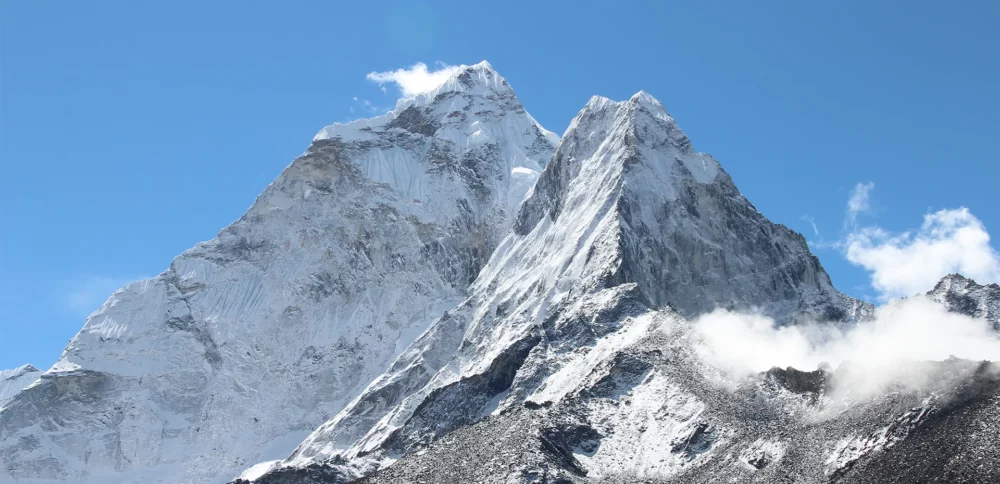
This is the first acclimatization day on the Everest Base Camp and Two High Passes Trek. We will hike up to the Everest View Hotel for a panoramic scene of the Everest region peaks, including Ama Dablam, Everest, Lhotse, Thamserku, and more. En route, we will also visit the Syangboche Airstrip, which was once one of the highest airstrips in the world. At present, it is not operational but continues to be a helipad zone. After we are done with the hike, we will have a few hours to explore the charming Namche Bazaar.
Accommodation
LodgeMax Altitude
3440mDay 04: Trek from Namche to Tengboche
Today we will ascend uphill with views of Thamserku and Ama Dablam Peak. After the initial climb, we will descend to Phunki Thenga, reaching 3250 meters above sea level. From there, the trail ascends again all the way to Tengboche.
Distance
5.9 kmActivity
6 hours trekAccommodation
LodgeMax Altitude
3870mDay 05: Trek from Tengboche to Dingboche
Starting the 5th day of the Everest Base Camp and Two High Passes Trek, we will initially descend to Debuche village, crossing the Imja River. Passing by Pangboche village, we will climb to Somare and continue going east to reach Dingboche.
Distance
9.1kmActivity
6 hours trekAccommodation
HotelMax Altitude
4400mDay 06: Dingboche Acclimatization Day, climbing the (5100 m) hill of Nagarshan and then back to the hotel
Today is the 2nd acclimatization day on the Everest Base Camp and Two High Passes Trek. To make the most out of the day, we will hike up to Nagarjun Hill, aka Nagarshan. This steep climb offers a great scene of the Makalu, Lhotse, and Island Peak.
Activity
2/3 Hours climbingAccommodation
HotelMax Altitude
4400mDay 07: Trek from Dingboche to Lobuche
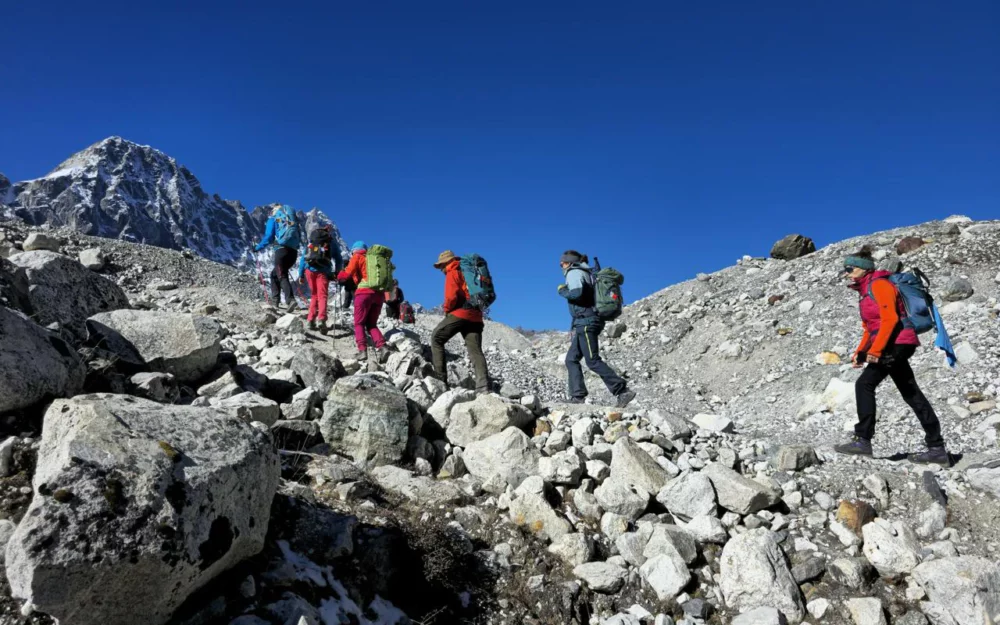
Day 7 of the Everest Base Camp and Two High Passes Trek is going to be tiring as we will climb up the Thukla Pass (4830 m). But before that, we will have to ascend to Dughla village, where we will rest for a bit. After crossing the pass, we will trek along the Khumbu Glacier and reach our destination.
Distance
10 kmActivity
6-7 hours trekAccommodation
LodgeMax Altitude
4900mDay 08: Trek from Lobuche to Gorakshep and then visit Everest base camp (5364m/17598 ft) Via Khumbu Glacier
Today is yet another long day on the Everest Base Camp and Two High Passes Trek. Following a rocky terrain, we will trek along the Khumbu Glacier to reach Gorakshep. From there, we will continue the trek and reach the Everest Base Camp. The scene from the base camp will be one to remember.
Distance
4 kmActivity
6-8 hours trekAccommodation
LodgeMax Altitude
5180mDay 09: Hike to Kalapatthar (5,545m/18,192ft) and then trek to Zhong La
Early in the morning, we will hike to Kala Patthar to experience the golden hour of the sunrise. Kala Patthar is the highest point of this trek. After that, we will get back down to Gorakshep and trek to Lobuche after breakfast. From Lobuche, we will head west and reach Zhong La.
Distance
10.5kmActivity
5-6 hours trekAccommodation
LodgeMax Altitude
4830mDay 10: Trek to Thangnak via Chola Pass (5417m/17767ft)
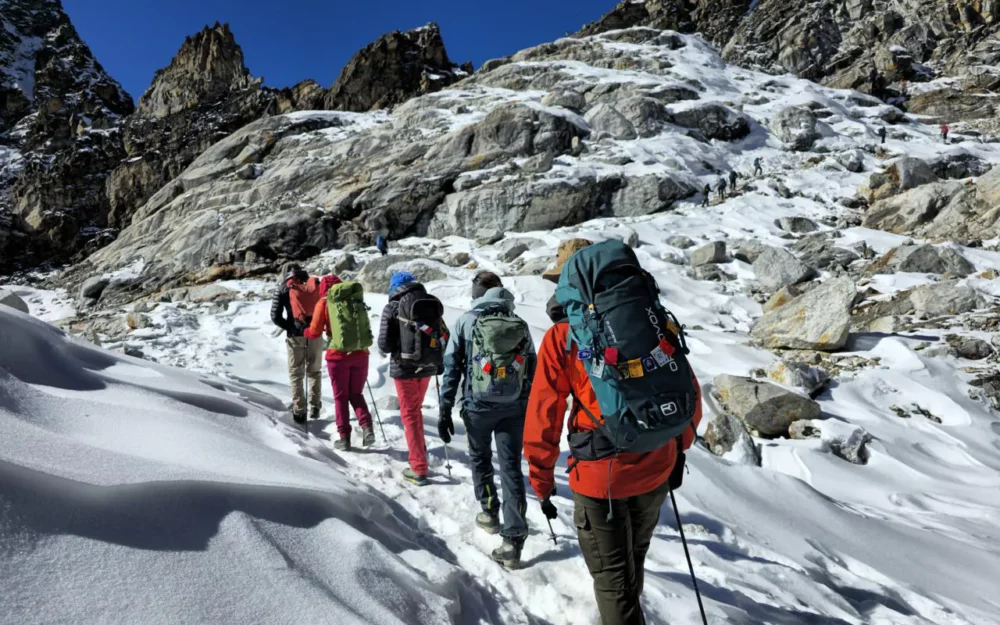
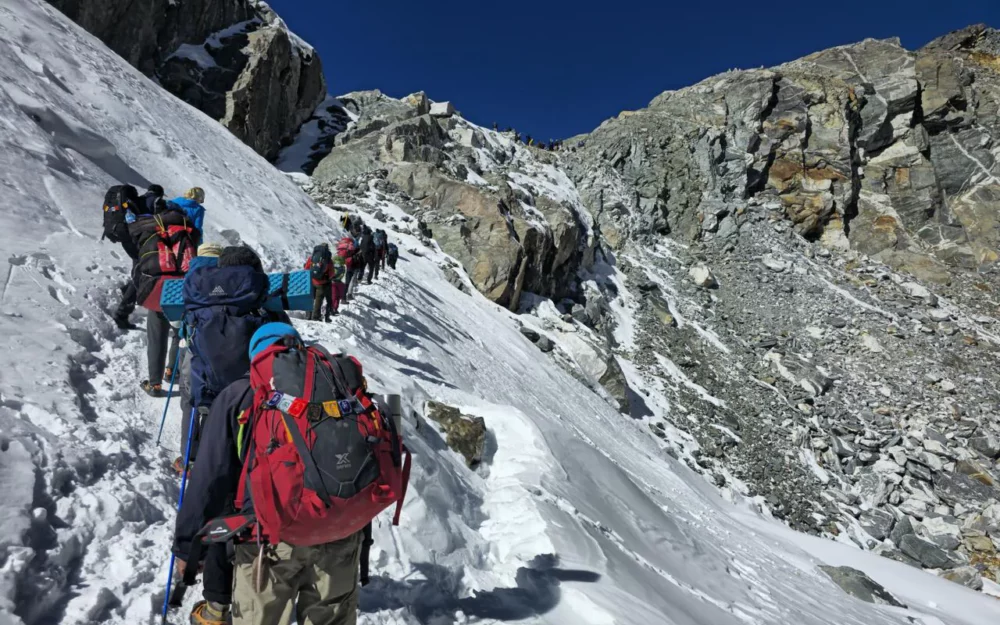
Day 10 of the Everest Base Camp and Two High Passes Trek features a steep ascent to the summit of Cho La Pass. This trail is rocky and full of icy patches all over. Descending from this pass, we will continue trekking over rocky and icy terrain all the way to Thangnak.
Distance
9.4kmActivity
6/7 hours trekAccommodation
LodgeMax Altitude
4700mDay 11: Trek to Gokyo Lake
From Thangnak, we will head west, following a moraine ridge, traversing alongside the Ngozumpa Glacier. Today is the shortest trekking day of the Everest Base Camp and Two High Passes Trek, but the view is one of the best in the journey. The clear blue water of the lakes in Gokyo will be a scene to remember. After we cross the third lake, we will arrive at the Gokyo village, where we will spend the night.
Activity
3 hours trekAccommodation
LodgeMax Altitude
4760mDay 12: Trek to Lungden via Renjo pass (5360m/17580ft)
The next morning, on the Everest Base Camp and Two High Passes Trek, we will begin the day’s trek after a hearty breakfast in Gokyo Village. The initial part of the trek today features a set of steep stone steps that make up a decent portion of the Renjo La Pass climb. From the summit of the pass, we will enjoy a wide view of Everest, Gokyo Lakes, and Rolwaling Range. Dropping down from the pass, we will go over switchbacks, reaching Relama Tsho, and continue will we reach Lungden.
Activity
6/7 hours trekAccommodation
LodgeMax Altitude
4300mDay 13: Trek to Thame
Today, we will descend down from Lungden and enter the Bhote Koshi Valley. We will traverse an old trade route and stop at villages such as Marlung and Taranga en route. After about 4 hours of trekking, we will reach our destination of the day.
Distance
6.8 kmActivity
4 hours trekAccommodation
LodgeMax Altitude
3800mDay 14: Trek to Namche Bazaar
Day 14 of the Everest Base Camp and Two High Passes Trek has us follow a riverbank for the most part, making it a scenic and calming trek experience. Soon enough, we will reach the village of Thamo, followed by Samde village, where we will rest for a while. Our lunch will be served there. After a satisfying meal, we will continue the trek, crossing a couple of suspension bridges and descending a little before climbing to the vibrant town of Namche.
Distance
7.4 kmActivity
5-6 hours trekAccommodation
LodgeMax Altitude
3440mDay 15: Trek back to Lukla
Retracing our steps, today we will trek all the way to the starting point of the Everest Base Camp and Two High Passes Trek. From Namche, we will first get to Phakding, exiting the Everest National Park region. After that, we will continue the trek to Lukla, crossing many suspension bridges and leaving Monjo and Benkar village behind. After about 6 hours of trekking, we will finally reach Lukla.
Distance
13.5 kmActivity
6/7 hours trekAccommodation
LodgeMax Altitude
2800mDay 16: Fly back to Kathmandu early in the morning around 07:00 AM
Flights in the Himalayan and hilly region of Nepal are mostly limited to the morning hours since the afternoon winds are unsuitable for flight operations. Starting with breakfast, we will grab our bags and get on the flight back to Kathmandu. During the flight, you will catch a glimpse of the hills and peaks you connected with on the Everest Base Camp and Two High Passes Trek.

Duration
35 minutesAccommodation
HotelMax Altitude
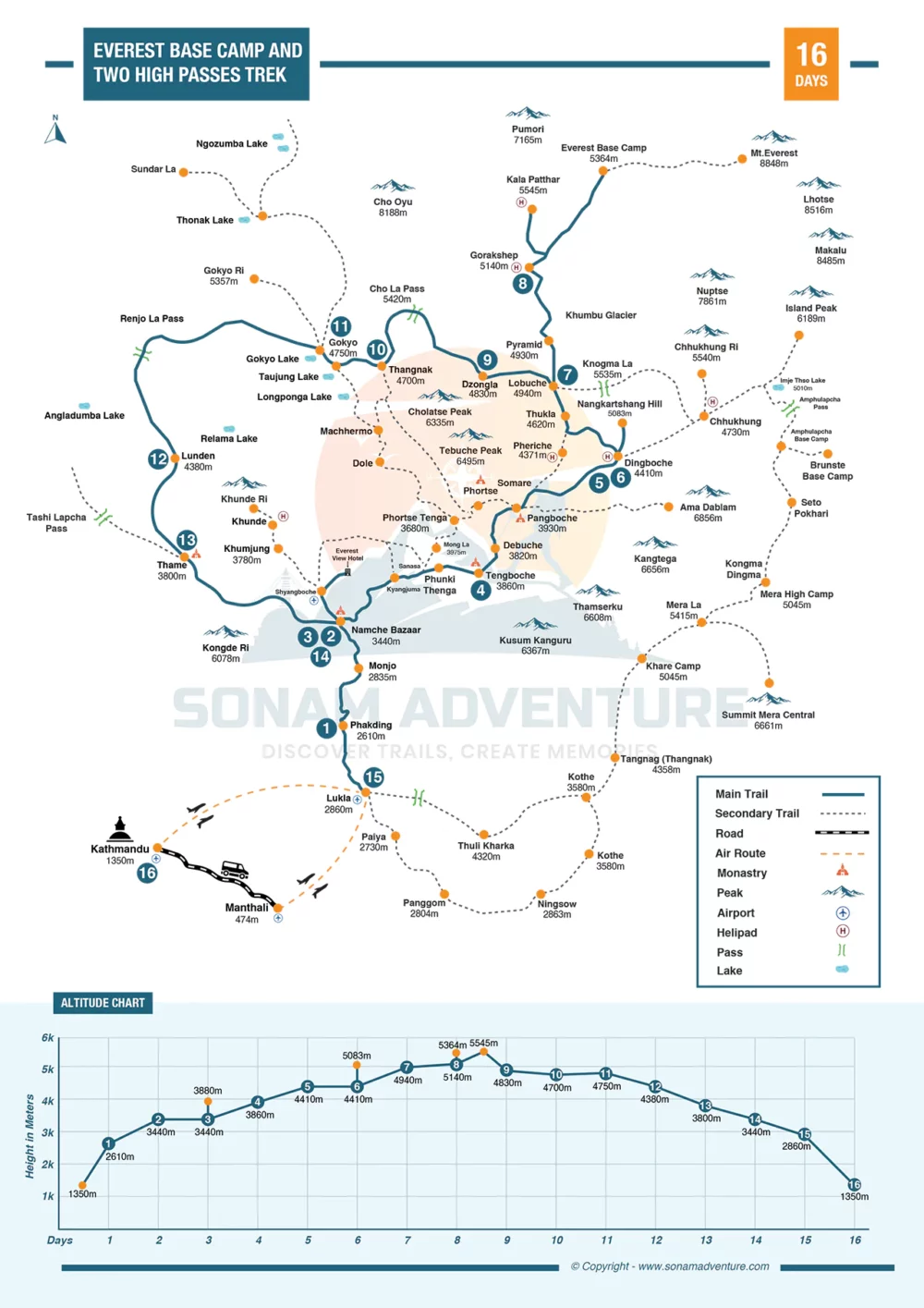
1400mEverest Base Camp and Two High Passes Trek Altitude Chart
Trip Information - Good to Know
Add-Ons
Private Helicopter flight to and from Lukla
A commercial flight to and from Lukla features a small cargo plane with can accommodate 6 to 8 passengers, while it is the standard transportation mode, it is not the best. A chartered helicopter ride offers better views since it has wide windows and it can even fly amidst the afternoon of the hilly region. This upgrade is exclusive to the standard package.
How does our trip start?
The trip starts with a flight to Lukla, the starting point, on the first day. After reaching Lukla, we will trek to Phadking, starting the journey.
Difficulty
On a scale of 10, this trek is about 7.5, making it unsuitable for beginners and first-timers alike. There are a couple of steep ascents that can be undoable for inexperienced trekkers.
Best seasons
The best seasons for this trek are autumn ans spring, offering the best trekking conditions out of all other seasons. These seasons are the most popular options for their amazing views, low chances of rain, and overall great landscape.
Accommodation, Food and Drink
Accommodations are arranged on a twin-sharing basis, and tea houses will be our primary choice of stay in the hilly region. While the standard package provides you with three meals per day (B, L, D), drinks are not a part of it.
Transportation
All the ground transportation required by this trek will be covered by the standard trek package, including flights to and from Lukla.
Permit
To do this trek, every trekker must have a Khumbu Pasang Lhamu Rural Municipality Permit, a Sagarmatha National Park Entry Permit, and a TIMS card.
Trip preparation and fitness
For this trek, we recommend starting your physical preparation 10 to 12 weeks before the intended start. For your exercises, you need ot build your stamina and do cardio workout sessions.
Cost & Budget
This Everest Base Camp and Two High Passes Trek package will cost you USD ________ per head.
Your Extra Expenses
Things like visa fees, international flight expenses, additional meals, any kind of drinks, extra night stay, upgraded accommodation, private accommodation, tips for the crew members, and more are your extra expenses.
Things to Remember Before Trekking The Everest Base Camp and Two High Passes Trek
- Sleeping bags, beanies, shades, trekking poles, and water purification tablets are essential for this trek.
- Make sure that your travel insurance policy covers expenses up to 5500 meters above sea level.
- Your insurance must also cover the expenses of any emergency evacuation services during the trekking days.
- Power banks are very handy when it comes to charging your devices on the way.
- An Everest Link Internet Card is the best internet coverage you will get on this trek. You can also use the WiFi at eateries, but they might charge you a few bucks and are often unreliable.
Frequently Asked Questions
How often does Cho La Pass or Renjo La Pass get blocked due to snow or bad weather?
Both Renjo La Pass and Cho La Pass are covered in snow for an extended period of the year. They are usually passable in the spring and autumn seasons, which also happen to be the best trekking seasons.
Can I rent microspikes or crampons in Namche for crossing the high passes?
Yes, you can rent microspikes or crampons in Namche Bazaar along with many other trekking and mountain climbing gear, but you will not need any specific trekking equipment to cross the high passes. A pair of trekking poles can get the job done without any difficulty.
Is there any Wi-Fi available at Gokyo Village?
Most of the Khumbu region has good cell reception with internet coverage via an internet card, which is not available in any other trekking region in Nepal. The Gokyo village is not an exception; it has reliable Wifi connectivity with an average cell signal.
What are the alternative exit routes if I can’t cross one of the passes?
If you can not cross the Cho La Pass, it will add about 2 more days to your itinerary since we will have to take a detour to Dhole and Mong La to reach the next destination on the itinerary. From Gokyo, you can skip the passes by trekking to Thame, Murlung, and eventually Namche.
Are there any local yak herder shelters or emergency huts near the passes?
No, there are no local yak herder shelters or emergency huts near the passes. However, emergency medical services and evacuation services are available throughout the trek.
Is Zhong La a proper settlement or just a resting spot?
Zhong La is neither a settlement or a resting spot, it is a 4830 meter high mountain pass.
Can I visit the 5th or 6th Gokyo Lakes during the trek?
Yes, you can visit the 5th and 6th Gokyo Lakes, but you will have to trek about an hour round-trip, which will add to the overall trekking duration of the day. This can be exhausting for some, so the best way is to visit the 5th and 6th lakes the next morning.
How early do I need to start on the day I cross Cho La Pass?
Preferably, we need to start the day around 7 or 8 in the morning since we will be on the trail for 6 to 7 hours. Generally, we have to keep a couple of hours as a contingency in case anything unpredictable stops our way for some hours.
Are guides trained to handle mild frostbite or snow blindness on high passes?
Yes, our licensed guides are trained to handle mild frostbite or snow blindness; however, the chances of experiencing them on this Everest Base Camp and Two High Passes Trek are very low. The chances are a little higher in the winter season, but still not high enough to be considered a major risk.
Is it worth climbing Gokyo Ri if I’ve already done Kala Patthar?
Gokyo Ri and Kala Pattar are different in terms of the views they offer. While Kala Patthar offers a close view of Everest, Lhotse, Nuptse, and more. Gokyo Ri offers a wide view of Everest, Cho Oyu, Makalu, and the stunning Gokyo Lakes. The latter is way less crowded in comparison.
How physically demanding is the climb up to Renjo La compared to Kala Patthar?
The climb up to Kala Patthar is about 2 hours long, features a short but steep trail. Meanwhile, climbing Renjo La Pass is a longer trail with about 1000 meters of elevation change. The latter is more physically demanding in comparison.
Do the lodges in Dingboche or Lobuche have backup generators for charging?
Backup generators are not a thing in the remote Himalayas, but they do have solar power backup, which the locals rely on for their daily chores. However, charging on their backup power supply will cost you a few bucks.
Do I need technical mountaineering skills to descend the icy part of Cho La?
No, you do not have to have technical mountaineering skills to descend the icy part of Cho La; just basic mountaineering skills are sufficient for it.
Is there a tea house near the edge of Renjo La for resting before the final push?
No, there are no tea houses near the edge of Renjo La, since high mountain passes are not suitable for living.
Are there altitude rescue options available from Lungden or Thame?
Helicopter evacuation services in times of emergencies are available throughout the Everest Base Camp and the Two High Passes Trek.
Can the trek be done without reaching Everest Base Camp if the weather turns bad at Lobuche?
Of course, if unpredictable events such as bad weather and natural calamities stop us from reaching the Everest Base Camp, we can continue doing the rest of the itinerary.
Trip Reviews
 Write a Review

How to book a trip?

make free inquiry

