


Annapurna Base Camp Trek : 11 days

Trip Duration
11 Days
Group Sizes
2-16 People
Transportation
Bus
Destination
Nepal
Max. Altitude
4,130m. / 13,550ft.
Nature of Trip
Trek
Best Season
Sep-Nov, Mar-May
Activities
- Sightseeing
- Trekking

Difficulty
Moderate
Meals
- Breakfast
- Lunch
- Dinner

Start & End Point
Kathmandu
Accommodation
- Teahouse
- 3-star hotel
Trip Highlights
- See an amazing sunrise at Poon Hill.
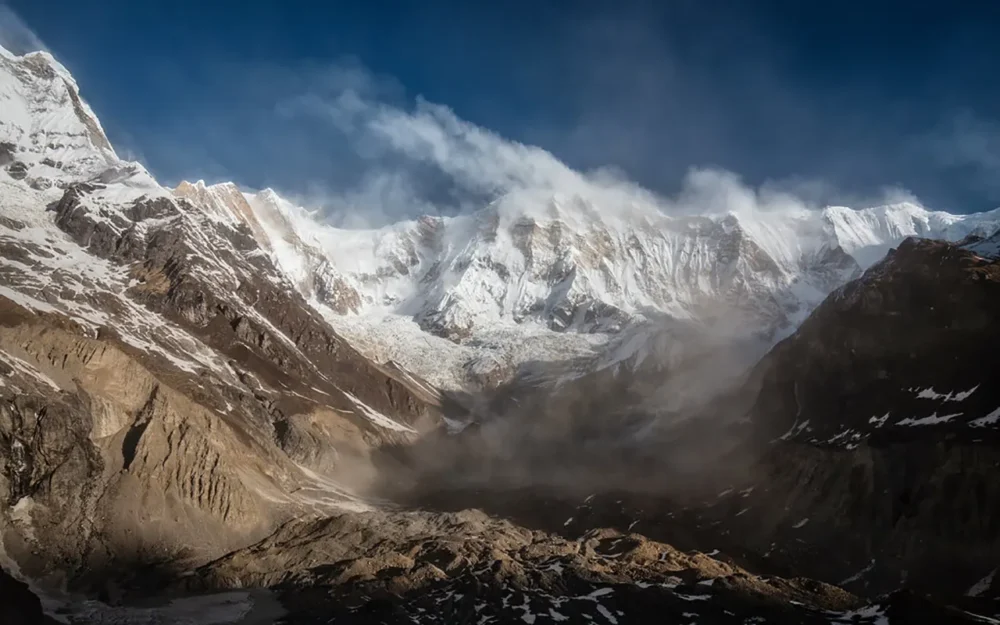
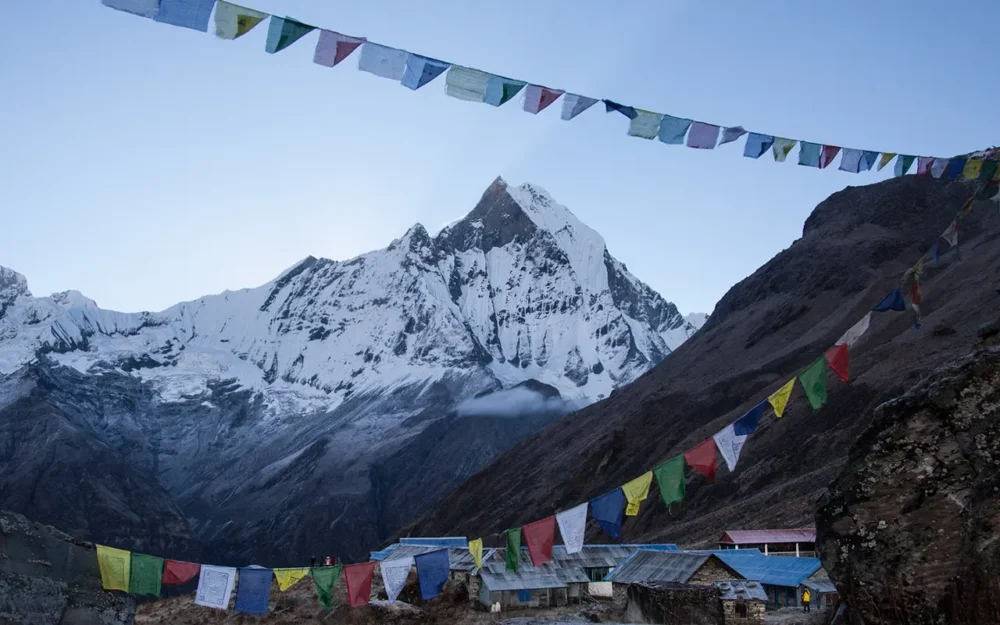
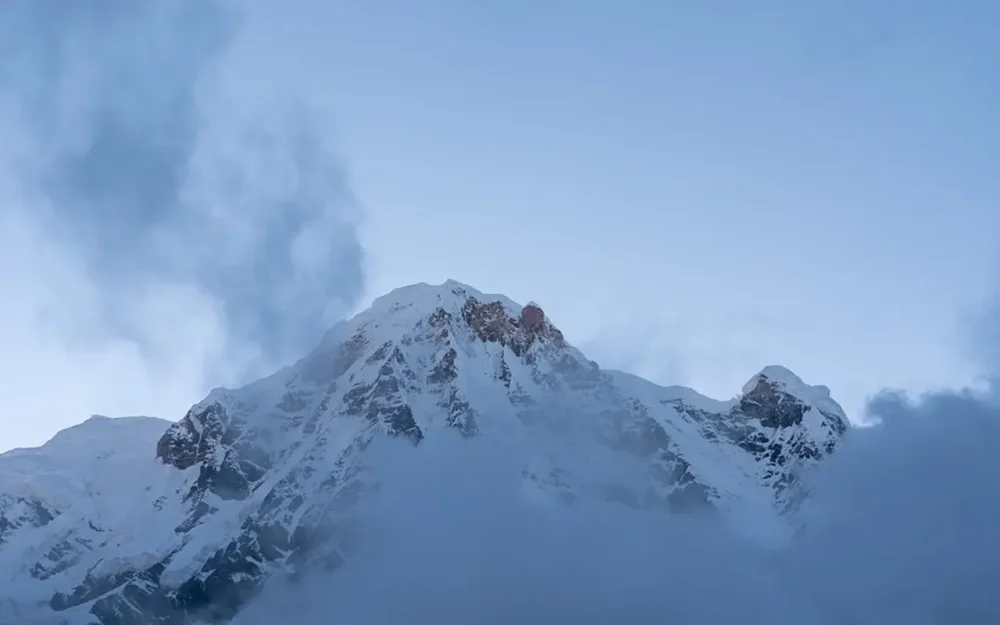
- Witness views of Annapurna and Machhapuchhre peaks.
- Walk through colorful rhododendron forests.
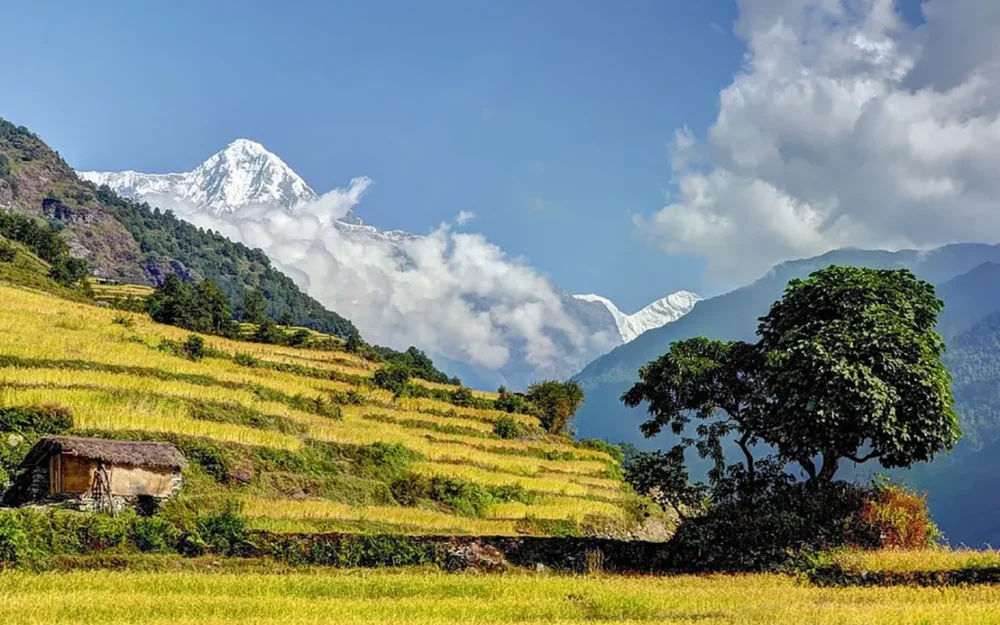
- Explore Gurung and Magar traditional villages.
- Enjoy a beautiful Annapurna Sanctuary.
- Soak yourself in such hot springs in Jhinu Danda.
- Rest in comfortable mountain teahouses with friendly hosts.
Overview of Annapurna Base Camp Trek : 11 days
The Annapurna Base Camp Trek is one of the most amazing and rewarding treks in Nepal, and it comes with an ideal mix of natural beauty, cultural richness, and adventure. It is a trek through a variety of landscapes in the heart of the Annapurna massif, from luxurious subtropical forest to alpine meadows and high mountain wilderness.
Amidst the journey, we get to have breathtaking panoramic views of the highest peaks of the world, like Annapurna I, Machhapuchhre (Fishtail), and Dhaulagiri, among others. The diversity of the landscapes and the change of altitude make the journey a thrilling trekking experience that attracts any nature enthusiast.
In addition to incredible scenery, you get an actual feel for the lifestyles of the Gurung and Magar people, who live along the trail. It has small villages with stone housing, hospitable people, and colorful festivals to enrich the cultural experience.
The Annapurna Base Camp Trek is a moderate sort of trail available for trekkers who are reasonably fit, and thus it has been a favorite with beginners and experienced trekkers. No matter what kind of adventure you want to experience, whether it is exciting views of mountains, calming nature walks, or culture-related experiences, this trek will be a memorable trip in the fantastic Himalayas.
Itinerary of Annapurna Base Camp Trek : 11 days
Day 01: Drive from Kathmandu to Pokhara (820 m)
On the first day of our Annapurna Base Camp Trek, we will be driving from Kathmandu to Pokhara, covering 200 kilometers in 6 to 7 hours.
This drive offers a beautiful landscape of green hills, rivers such as the Trishuli and Marshyangdi, terraced crops, and small towns. There are some days when we can see the Himalayas on the way.
Once we reach Pokhara, we will walk around the marvelous Phewa Lake and see the busy streets and the lakeside with a relaxing ambiance.

Duration
6 to 7 hours
Distance
200 km
Accommodation
3-star hotel
Max Altitude
820mDay 02: Drive from Pokhara to Nayapul-Birethanti-Tikhedhunga (1,570 m) and trek to Ulleri (1,540 m)
On Day 2, we will have a driving route from Pokhara to Nayapul and to Birethanti that usually takes 2 hours. The route is a scenic trip through hills, rivers, and small settlements.
Birethanti will be our starting point to trek to Ulleri. The route heads along splendid forests, suspension bridges, and lovely villages such as Tikhedhunga (1,570 m).
This will be followed by a long section of stone steps until we reach Ulleri (1,540 m), a beautiful Magar village. The trek is a 4-hour experience that provides beautiful views of the hills.
Duration
2 hour ride and 4 hour trekAccommodation
TeahouseMeals
Breakfast, Lunch & DinnerMax Altitude
1540mDay 03: Trek from Ulleri to Ghorepani (2,860 m)
On this day, we will trek from Ulleri to Ghorepani (2,860 m). The trail has a moderate climb, traversing green rhododendron and oak trees with a cool atmosphere, which presents an opportunity to see birds and wildlife.
On the way upwards, we will see little streams and traditional villages. The journey is pleasant in the fresh mountain air and with soothing scenery.
It will take us approximately 4 hours of trekking before reaching Ghorepani village, which is very beautiful and presents beautiful scenery of the Annapurna and Dhaulagiri mountains.
Duration
4 hours TrekAccommodation
TeahouseMeals
Breakfast, Lunch & DinnerMax Altitude
2860mDay 04: Hike to Poon Hill (3,210 m), then trek to Tadapani (2,630 m)/Chuile (2,309 m)
On this day, we will wake up early in the morning and set off to hike up in the sunrise over Poon Hill (3,210 m) to view the sunrise and the panoramic view of the Himalayas.
We will see spectacular 360-degree views of the Annapurna and Dhaulagiri ranges of majestic mountains that are illuminated in golden light at the top.
We will have breakfast in Ghorepani after the sunrise and then trek to Tadapani (2,630 m) or Chuile (2,309 m). It is a 4-hour-long trail amidst rhododendrons in picturesque ridge walks
Duration
4 hourAccommodation
TeahouseMeals
Breakfast, Lunch & DinnerMax Altitude
2630mDay 05: Trek from Tadapani/Chuile to Chomrong (2,165 m)/Sinuwa (2,340 m)
On this day, we will trek to Chomrong (2,165 m) or Sinuwa (2,340 m) starting from Tadapani or Chuile. The trail becomes a steep forest path that passes across a suspension bridge and then along terraced rice farms and typical Gurung villages.
In Chomrong we have a magnificent panorama of Annapurna South and Machhapuchhre. If we proceed to Sinuwa, we will ascend stone steps through forested trails. The walk altogether will last around 5 hours.
Duration
5 hoursAccommodation
TeahouseMeals
Breakfast, Lunch & DinnerMax Altitude
2340mDay 06: Trek from Chomrong/Sinuwa to Himalaya (2,890 m)/Deurali (3,174 m)
Day 6 will be a trek up Chomrong or Sinuwa to Himalaya (2,890 m) or Deurali (3,174 m), depending on how far we have walked. The track goes by dense bamboo and rhododendron forests and continues to follow the Modi Khola up the valley.
We will walk through some quiet areas such as Bamboo and Dovan and feel the fresh forest air and have time to observe some waterfalls and wildlife moments. The walks are upwards with gentle inclinations and through forests that take us further into Annapurna and last about .
Duration
7 hoursAccommodation
TeahouseMeals
Breakfast, Lunch & DinnerMax Altitude
3174mDay 07: Trek from Himalaya/Deurali to ABC (4,130 m) via Machhapuchhare Base Camp
On this day, we will trek to the Annapurna Base Camp (4,130 m) and Machhapuchhare Base Camp (3,700 m) through Deurali or Himalaya. The trail winds up the alpine scenery slowly; there are fewer trees and sights of the mountains around.
Close to MBC, the spectacular scenery of Machhapuchhare, Hiunchuli, and Annapurna South comes into the scene.
We leave MBC and climb steadily onto the core of the Sanctuary in Annapurna. Approximately 5 hours later, we are there at ABC with huge, towering Himalayas surrounding us on every side.
Duration
5 hoursAccommodation
TeahouseMeals
Breakfast, Lunch & DinnerMax Altitude
4130mDay 08: Trek from ABC to Bamboo (2,350 m)
On Day 8 we will leave the Annapurna Base Camp (4,130 m) and retrace our steps towards Bamboo (2,350 m). The hike is the last chance to admire the marvelous mountain landscapes and then turn back into the greenery.
We will go through Machhapuchhare Base Camp, Deurali, and Dovan, re-entering the dense forests after passing through the alpine regions.
The downhill slant is slow, however continuous, and occupies about 6 hours. Our overnight will be spent in a quiet forest environment at Bamboo.
Duration
6 hoursAccommodation
TeahouseMeals
Breakfast, Lunch & DinnerMax Altitude
2350mDay 09: Trek from Bamboo to Jhinu Danda (1,780 m) and nearby natural hot springs
On the 9th day, we will trek to Jhinu Danda (1,780 m), a quiet village with natural hot springs. This route starts with an easy trek, followed by a steep downhill trek through forests and Nepali stone steps down to Chomrong.
We will then descend steeply down to Jhinu Danda, taking approximately 4 hours in all.
Once we get to Jhinu, we will be able to rest our aching muscles in the hot springs near the river, one of the best incentives after several trekking days.
Duration
4 hoursAccommodation
TeahouseMeals
Breakfast, Lunch & DinnerMax Altitude
1780mDay 10: Trek from Jhinu Danda to Siwa/Ghandruk Phedi (1,150 m) and drive to Pokhara (820 m)
On Day 10 we continue the trek down to Siwa or Ghandruk Phedi (1,150 m)—an easy descent on an almost downward path through forest and terraced farmland. The hike lasts approximately 3 hours, and there is serene scenery in the villages and clean mountain air.
Upon arrival at Siwa or Ghandruk Phedi, it will take a 3-hour drive back to Pokhara (820 m). The trip provides you with peaceful views as we go back to the city located by the lakeside to have some relaxation and party at the end of the trek.
Accommodation
3-star hotelMeals
Breakfast, LunchMax Altitude
820mDay 11: Drive from Pokhara to Kathmandu (1,350 m)
We will drive back to Kathmandu (approximately 200 kilometers and about 7 hours). The drive is full of the picturesque road past rivers and terraced mountains and hill residences. There will be lovely towns on the way and glimpses of the country and the mountains in the distance.
Our journey will end after the beautiful yet long ride, and we will be in Kathmandu, where you can relax and relive the breathtaking experience in the Annapurna region.
Duration
7 hoursDistance
200 kmMeals
BreakfastMax Altitude
1350mAnnapurna Base Camp Trek : 11 days Altitude Chart
Trip Information - Good to Know
Best Time
Spring (March to May) and autumn (September to November) are the best seasons of the year to trek to the Annapurna Base Camp.
During these seasons, the climate is very clear and stable with a breathtaking mountain view and a comfortable mountain climate, making it easy to trek up the mountain. There are blooming rhododendrons and a lot of vegetation in spring and clear air and picturesque scenery in autumn.
It is not advisable to visit during monsoons (June to August), when flooding and rain make the track extra slippery, and winter is quite cold with snow at higher altitudes.
Elevation and Distance
The highest point on the Annapurna Base Camp Trek is Annapurna Base Camp itself at 4,130 meters (13,550 feet). The trek has its lowest altitude of 820 meters (2,690 feet) in Pokhara, where it either starts or ends.
The total round-trip distance of the trek is about 115 kilometers (71 miles) on all routes from Nayapul or Birethanti to Annapurna Base Camp and back. The trek is characterized by a diversity of elevations, so the trail provides different scenery and difficulties.
Difficulty and Altitude Sickness
The Annapurna Base Camp trek is moderate in the level of difficulty, and it is accessible to trekkers with average levels of fitness and some experience of trekking. The trail is steep in places, has a long incline and uneven ground, and is very well facilitated through teahouses.
There is a risk of altitude sickness among some of the trekkers in that the maximum altitude is 4,130 meters. To reduce the risks, one has to acclimatize properly, ascend gradually, drink water, and listen to his or her body.
Rest days and gradual summiting assist in making trekking potentially safe and enjoyable.
Maximum and minimum walk per day
Day 6 is the longest trekking day in the Annapurna Base Camp trek, as it takes approximately 7 hours to trek from Chomrong or Sinuwa to Himalaya or Deurali because of the consistent uphill walking and the extra distance covered. The walking day that is normally the shortest is the Poon Hill sunrise hike on Day 4, which is about 45 minutes.
Trekkers will walk 4 to 5 hours each day; that will enable them to counter a difficult climb with a moderate-speed descent by taking frequent rests.
Accommodation
During the Annapurna base camp trek, you are mostly accommodated in the local teahouses, which are comfortable, warm, and humble with excellent mountain views. Bathrooms are to be shared, and often squat toilets of an Eastern type are encountered at higher altitudes.
Although most teahouses have warmth in common places, rooms may be cold; thus, carrying a good sleeping bag is highly recommended to keep one warm and comfortable.
Food and Drink
The package meals involve breakfast, lunch, and dinner with typical Nepali food, including dal bhat (rice and lentils), vegetable curry, momos, and soups. There is usually tea, coffee, and sometimes fresh juices.
Additional food or drinks outside these meals have to be bought separately.
Some snacks, such as nuts and chocolates, a reusable water bottle, and water-purifying tablets are also a good idea, so you can drink water without risking infections.
Alternative Routes
The Annapurna Base Camp trek will have various alternative routes according to your preferences. The more common one is beginning at Ghandruk or Jhinu Danda, with extra cultural and natural features such as hot springs.
Another option would be hiking through Mardi Himal to lesser-traveled routes and beautiful scenery.
In a more extensive adventure, the ABC Trek and the Annapurna Circuit give you the combination of various landscapes and diverse terrain.
These options bring in flexibility, new experiences, and less crowdedness to the individuals who have other plans.
Can a beginner join this trek?
Yes, even beginners can participate in the Annapurna Base Camp trek with sufficient preparation. It is a moderate trail without technical skill; rather, a good level of fitness is essential. The altitude can be tackled through slow acclimatization, a trek with local, aware guides, and a slow pace.
It is easy to accomplish and friendly to beginners because of the marked trails and the cozy teahouse. Given the right attitude, physical fitness, and encouragement, this breathtaking experience in the Himalayas can be safe and sound for first-time trekkers.
Preparation and Fitness
The Annapurna Base Camp trek should be easy by doing cardiovascular exercises and muscle-strengthening activities, including walking, hiking, or cardiovascular exercises, for a minimum of 6-8 weeks before the trek. Target leg and core exercises to cope with steep obstacles and non-level surfaces.
You can hike around with a loaded backpack to get a feel for what to expect during trekking. It requires proper sleep, water, and food. Psychological training on weather and altitude variations also enhances the entire adventure and safety in trekking.
Gadget charging, Internet, and communication
Most trekking teahouses in the Annapurna Base Camp trek offer gadget charging facilities, with an additional cost. The power supply may also not be consistent; hence, it is appropriate to bring along a portable power bank.
Mobile network connectivity is spotty in nature but can be found in bigger villages such as Chomrong and Ghorepani.
Access to the internet is poor, unstable, and slow, mostly using local SIM data. You can communicate better by carrying a Nepali SIM card.
Satellite phones are used in case of an emergency in remote locations.
Permit
It requires you to take two permits: the Annapurna Conservation Area Permit (ACAP) and the Trekkers Information Management System (TIMS) card for the Annapurna Base Camp Trek.
These permits contribute to saving the natural environment of the region and secure transportation for trekking. They are both necessities, and they are to be carried during the expedition.
The good news is that these permits are contained in the trekking package, and we will take care of getting them ready in time before the trek starts.
Transportation
Transportation is required from Kathmandu to Pokhara, Pokhara to Nayapul, and from Ghandruk or Siwa back to Pokhara, as well as the return drive from Pokhara to Kathmandu. We provide comfortable, well-maintained vehicles that match your group size so that journeys are smooth and safe. You can always have a peaceful trip because our experienced drivers are well oriented on routes and local conditions, so you will not wear yourself out during the trip.
Insurance
The Annapurna Base Camp trek is strongly advised, and in most instances, it is compulsory to get travel insurance. It has to involve emergency medical care, such as evacuation and helicopter pickup in high-altitude sickness or injuries. The trip cancellations, loss of belongings, and accident coverage are valuable as well.
Full-coverage insurance grants a safe mind and financial support in untimely scenarios on the trek. We recommend that every trekker come up with the appropriate cover prior to the trek so that they remain safe and sound during the adventure.
What to Expect
The Annapurna Base Camp trek promises an exciting combination of nature, culture, and an adventure involving physical exertion. You will go through varied scenery—lush vegetation and terraced land, alpine meadows, and rocky, high-altitude landscapes.
There are villages that can give an authentic taste of Gurung and Magar culture along the way. You will be surrounded by breathtaking mountain views like Annapurna, Machhapuchhre, and Dhaulagiri.
Small-but-comfortable rest stops in teahouse accommodation and free-flowing natural hot springs follow. It will be an exciting, unpredictable, and fulfilling trip to the Himalayas featuring evolving weather, different levels of hiking, and the opportunity to meet other trekkers.
Frequently Asked Questions
What is the difficulty level of the Annapurna Base Camp trek?
The level can be characterized as moderate; it is recommended for the trekkers who have moderate fitness.
When will be the most appropriate season to trek?
Spring (March to May) and autumn (September to November).
Do I need a guide?
Guides are recommended but not mandatory.
Which permits are needed?
You need ACAP and TIMS permits.
Is altitude sickness a concern?
Yes, but with acclimatization it is possible.
What type of lodging will there be?
Basic teahouses that have shared bath areas and simple facilities.
Does it include food?
It includes breakfast, lunch, and dinner; it is preferable to have extra snacks.
Is this trek possible for beginners?
Well, yes, when properly prepared and fit.
What is the process of charging my devices?
There is charging at teahouses, but sometimes it costs a little bit; take power banks.
Do I need travel insurance?
Recommended and even obligatory sometimes.
What do I pack?
Clothing (warm clothes), a sleeping bag, snacks, a water bottle, and trekking equipment.
What is the total distance of the trek?
It is approximately 115 kilometers, a round trip.
What number of hours are we walking a day?
The average day is 4-7 hours.
Does this trek have mobile network facilities?
Present in bigger villages, in limited amounts in other places.
Trip Reviews
 Write a Review

How to book a trip?

make free inquiry

