


Langtang Valley Trek – 10 Days

Trip Duration
10 Days
Group Sizes
2-16 People
Transportation
Bus
Destination
Nepal
Max. Altitude
4,984m. / 16,352ft.
Nature of Trip
Trek
Activities
- Trekking
- Sightseeing

Difficulty
Moderate
Meals
- Breakfast
- Lunch
- Dinner

Start & End Point
Kathmandu
Accommodation
- Teahouse
- Lodge
- Hotel
Trip Highlights
- A peaceful trekking experience away from the big tourist attractions of Annapurna and Everest
- Scenic journey from Kathmandu to Syabrubesi Village, where the trekking adventure begins
- Exploring Langtang National Park, Nepal’s first Himalayan national park
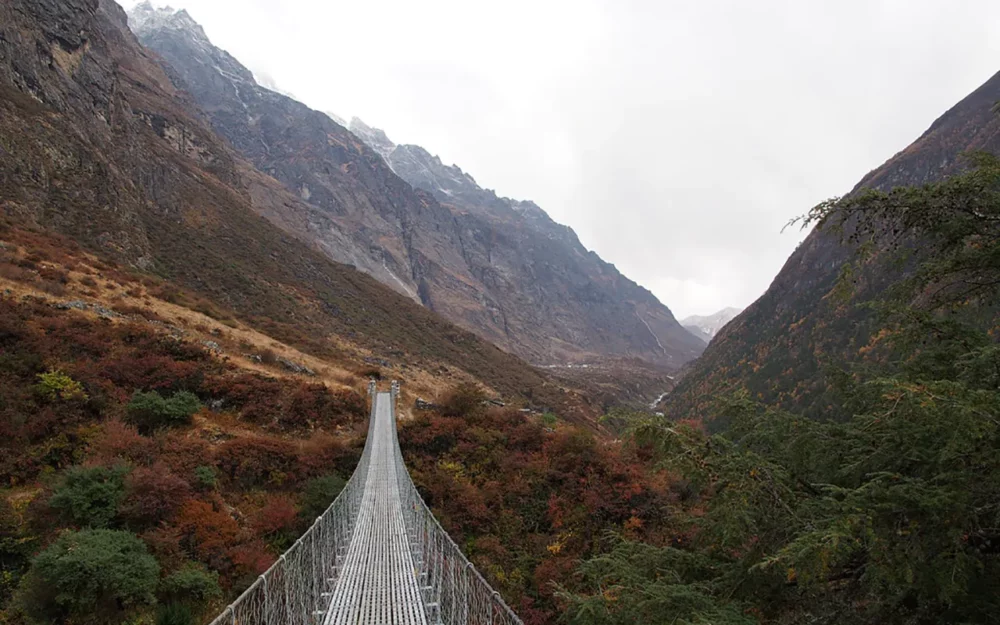
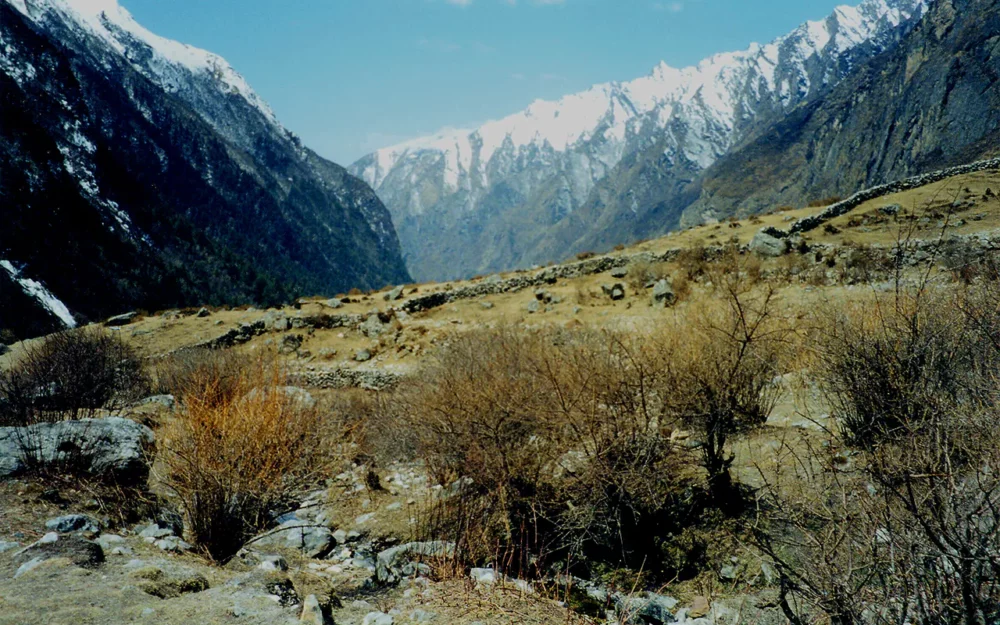
- Walking through rich forests, river valleys, waterfalls, and traditional Tamang villages
- Visit Langtang Village, magnificently reconstructed following the 2015 earthquake
- Discovering Kyanjin Gompa, a historic monastery of enormous value in the Langtang region
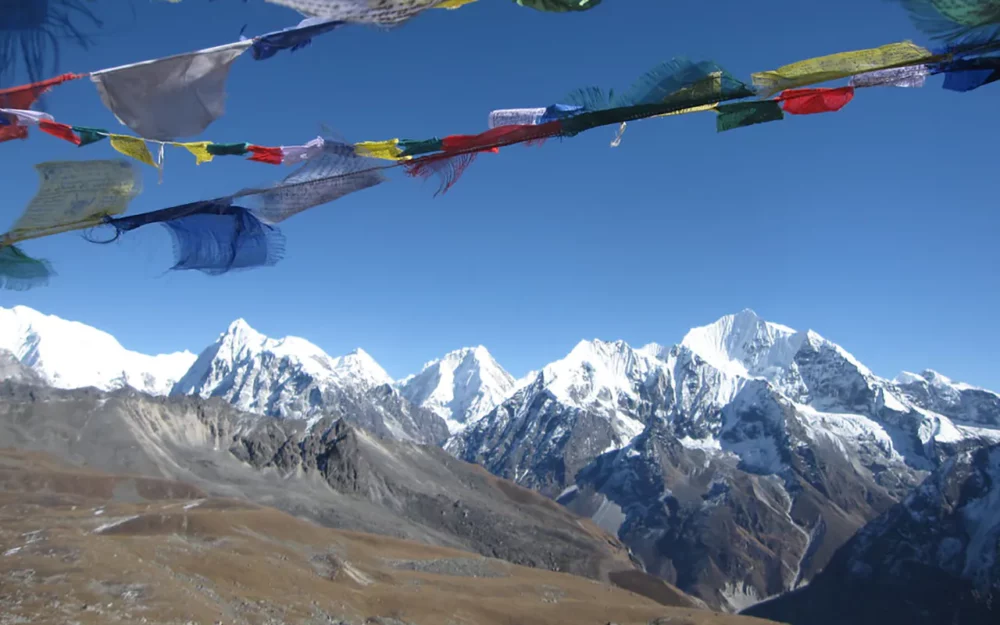
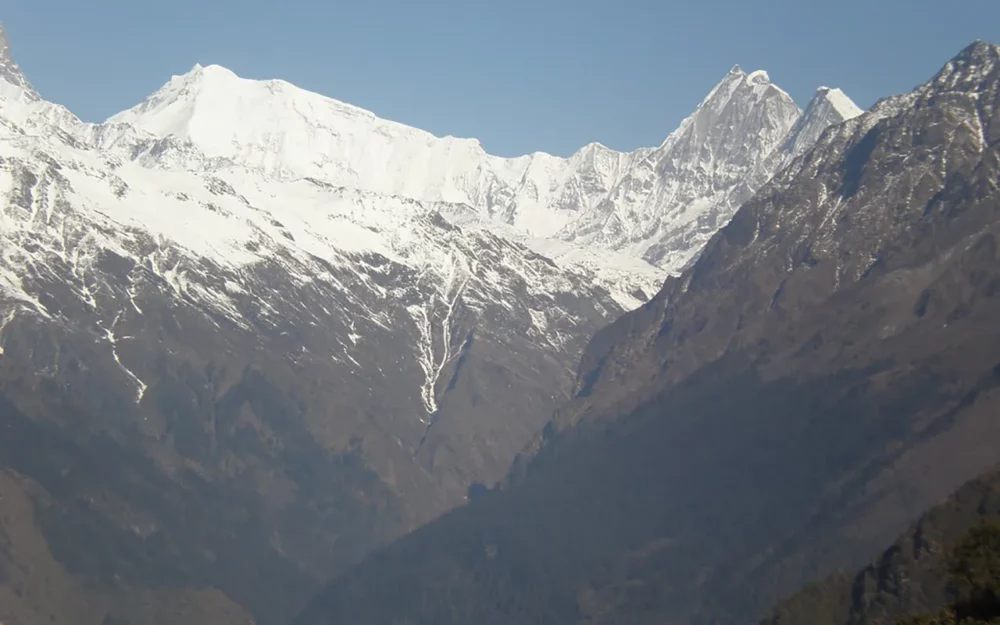
- An optional climb to Tserko Ri provides breathtaking views of Langtang Lirung, Kimshung, and Langshisha Ri
- Chance to see animals like red pandas, yaks, Himalayan tahr, and snow leopards
Overview of Langtang Valley Trek – 10 Days
The Langtang Valley Trek is one of the striking trekking destinations in the Langtang region of Nepal, located about 122 kilometers north of the capital city, Kathmandu. Travelers get the privilege of an awesome hiking experience without the heavy crowds found in well-known regions like Everest and Annapurna.
This journey will take you closer to the Tibetan border, offering you a once-in-a-lifetime opportunity to witness the local culture, traditions, and architecture, as well as a hospitable reception that will melt your heart. Additionally, this journey is a heaven for travelers seeking a natural, wilderness-filled adventure.
This 10-day Langtang Valley Trek itinerary picks up as you leave Kathmandu for a picturesque drive to Syabru Besi, the beginning points of your trekking adventure. You will walk through the route that passes through Nepal’s first Himalayan national park, Langtang National Park, established in 1976.
As the trail gradually ascends, you will wander through a trail that takes you through rich forests, traditional villages, river valleys, lovely cascades, and so on. The first night after trekking from the beginning point, you will spend your night at Lama Hotel in the mountains, surrounded by the lush greenery.
Moving on to the next part of the trail, the path will take you through Ghoda Tabela and Thangshyap to reach the Langtang Village, which was rebuilt after the devastating 2015 earthquake. Then, you will make your way up to the Kyanjin Gompa, located at 3870 meters above sea level.
You can explore a historic Buddhist monastery and a famous yak cheese factory, where you can taste fresh yak cheese and learn how it is made. On the following day, you can go on a side trip to Tserko Ri (4,984 m), where you will be treated to the sweeping panoramas of jaw-dropping snow-capped peaks like Langtang Lirung, Kimshung, Langshisha Ri, and many more.
Throughout this incredible Langtang Valley Trek for 10 days adventure, you may spot fantastic wildlife, including red pandas, Himalayan tahr, yaks, and even rare snow leopards, while exploring this serene, diverse ecosystem from green jungles to vast mountain pastures. After a lifetime of high-altitude hiking, you will make your way downwards to Lama Hotel, then to Syabrubesi to end the trek.
Overall, for the best mountain trekking experience, plan your trip around autumn and spring to create great memories. Sonam Adventure addresses your needs and safety, making your 10-day Langtang Valley Trek comfortable and enjoyable. Don’t miss out on the opportunity to experience the authentic charm of one of Nepal’s most popular destinations.
Itinerary of Langtang Valley Trek – 10 Days
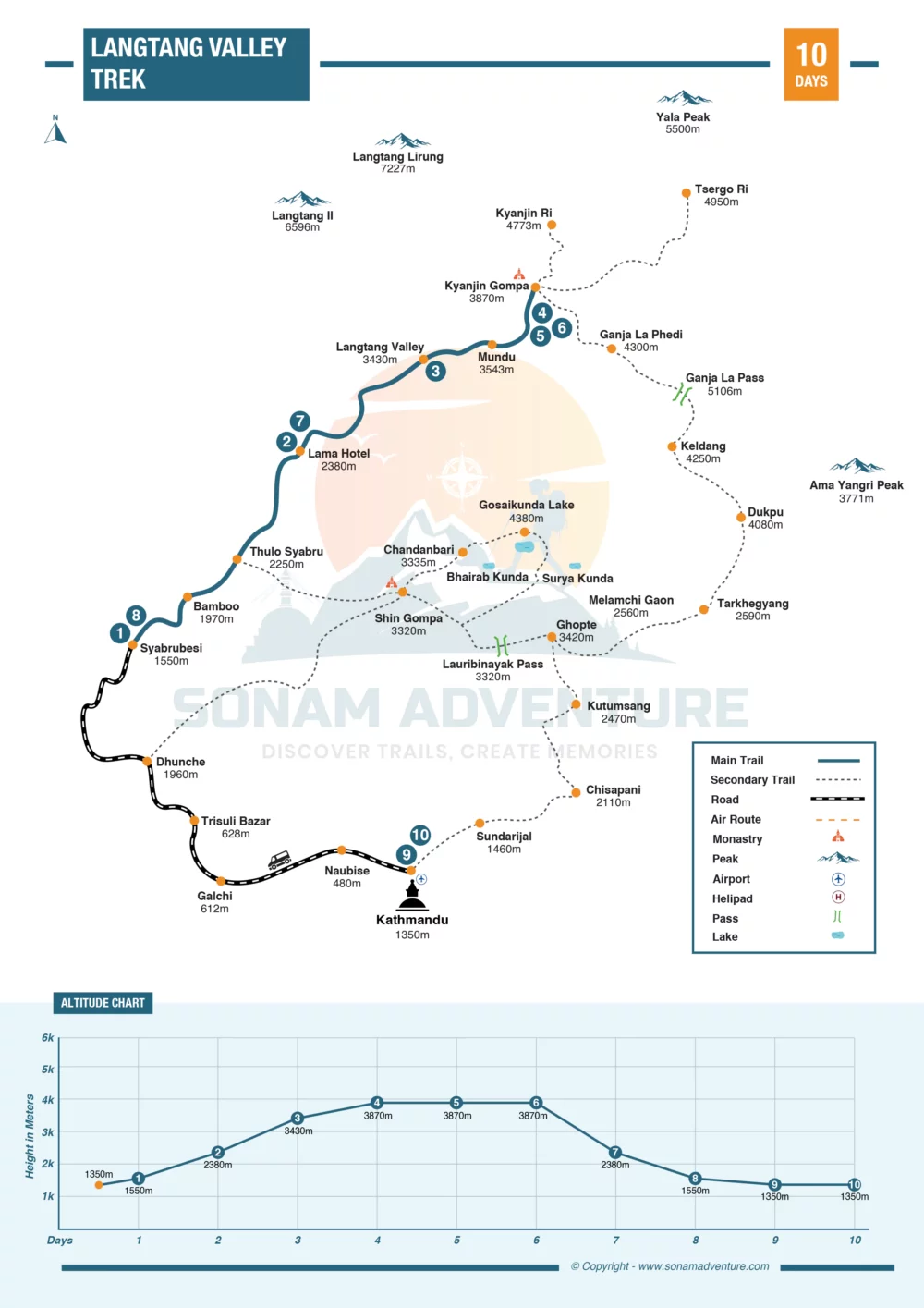
Day 01: Drive from Kathmandu to Syabrubesi
Today is the first day of the 10-day Langtang Valley Trek itinerary trip, and you will travel to Syabrubesi from Kathmandu by vehicle, either a local bus or a jeep. The changing views would surely delight you as you drive through small villages, hillside settlements, and terraced farmlands.
The road remains smooth up to Dhunche, after which it turns into a rough, bumpy dirt track leading toward Syabrubesi. The drive can take about 7 to 8 hours from the city. Once you arrive at your location, you will settle in for the night. From tomorrow, you will embark on the real trekking adventure in the Langtang region of Nepal.

Duration
6 to 8 hours Drive
Accommodation
Teahouse or Lodge
Max Altitude
1460mDay 02: Trek to Lama Hotel
Today, you will begin your trekking adventure with a steady hike from Syabrubesi to Lama Hotel. At first, you will drop an elevation to the Bhote Koshi Khola River and then follow a peaceful path alongside the Langtang Khola River. The trail will lead to Bamboo, which is a mix of gentle climbs. From here, the path is easier, taking you toward the Rimche village, where you will take a break for lunch.
After an hour of an upward walk from Rimche, you will finally arrive at the Lama Hotel. At a height of 2470 meters, it is a comfortable forest lodge surrounded by peaceful surroundings. You might be fortunate enough to see monkeys, red pandas, and other wildlife. This will be your overnight stop today on this Langtang Valley Trek for 10 days adventure.
Duration
5 to 6 hours WalkAccommodation
Teahouse or LodgeMax Altitude
2470mDay 03: Trek to Langtang Village
After having a hearty breakfast in the Lama Hotel, you will continue your journey, starting with a gentle climb through cool, shaded green jungles filled with oak and rhododendron trees. After some hours of hiking, you will enter a narrow gorge and trek along the fast-flowing Langtang River until you reach Ghoda Tabela.
As for the trail ahead from here, the trek goes from alpine forests before the trees begin to thin out. You will walk through the steady upward hill section as you make your way toward Langtang Village. Upon reaching this charming village, you will be greeted with the outstanding views of the Langtang Himal on this day’s 10-day Langtang Valley Trek itinerary.
Duration
5 to 6 hours WalkAccommodation
Teahouse or LodgeMax Altitude
3430mDay 04: Trek to Kyanjin Gompa
You will leave behind the beautiful Langtang Village after eating the first meal of the day with a glass of tea or coffee in the morning. On this day’s Langtang Valley Trek adventure, you will have an easy walk before the route gradually turns into gentle uphill sections. On the way, you will hike past the woodlands filled with alpine shrubs and other plants.
As you head east, the valley widens, revealing lovely meadows and snow-covered mountains rising in the distance. Then, upon walking for three to four hours, you will finally reach the most-awaited destination in this entire Langtang Valley Trek package, Kyanjin Gompa, where you can witness a monastery sitting on a small ridge, making the perfect spot to admire the surrounding atmosphere.
Duration
3 to 4 hours WalkAccommodation
Teahouse or LodgeMax Altitude
3870mDay 05: Acclimatization day or hike to Tserko Ri
The acclimatization day in Kyanjin Gompa is the fifth day of the 10-day Langtang Valley Trek itinerary. On this day, you can either choose to explore the village or embark on a rewarding hike to Tserko Ri, which stands at 4984 meters and is the highest point you will reach on this thrilling journey.
The trail to Tserko Ri is steep and strenuous, and the round-trip would take 7 to 8 hours. Upon reaching the top, you can admire the unobstructed views of the Langtang Lirung, Kimshung, Langshisha Ri, and the surrounding snow-blanketed peaks, which will make your day worthwhile and take away all your exhaustion with the beauty of nature. After that, you will scramble down to Kyanjin Gompa to settle for one more night on this Langtang Valley Trek package.
Duration
7 to 8 hours WalkAccommodation
Teahouse or LodgeMax Altitude
4984mDay 06: Optional side trip to Langshisha Kharka or Glacier viewpoint (4600 m)
On this day, you have the option to explore more of the upper Langtang Valley. After breakfast at the trekking lodge, you will trek to Langshisha Kharka, a beautiful high-elevation meadow at 4280 meters surrounded by breathtaking mountain vistas. If you want to look closely at the impressive ice formations, you can also head toward the Glacier Viewpoint.
After exploring and taking in the raw beauty of the Himalayas, you will descend to Kyanjin Gompa to recover and spend a peaceful night in the highlands. Tomorrow, you will walk back to Lama Hotel, retracing your steps through the same route on this Langtang Valley Trek for 10 days itinerary.
Duration
4 to 5 hours WalkAccommodation
Teahouse or LodgeDay 07: Trek back to Lama Hotel
After taking in the beauty of the Kyanjin Gompa, it is time you head back to the Lama Hotel, marking the start of the return trekking journey. On the way, you will pass through the same route that passes through the rhododendron and oak forests, swift-flowing rivers, and serene small mountain hamlets.
As the trail gradually descends, you will also stroll past the villages like Langtang and Ghoda Tabela. In about five to six hours, you will arrive at Lama Hotel, where you can refresh yourself with the enchanting view of the forest and the calming sound of the river. After several days of trekking in the Langtang area, this is definitely the right place to relax your body and mind.
Duration
5 to 6 hours WalkAccommodation
Teahouse or LodgeMax Altitude
2470mDay 08: Trek back to Syabrubesi
On the eighth day of the 10-day Langtang Valley Trek itinerary, you will descend to Syabrubesi Village, the trek’s final destination. You’ll travel a mountain trail through little settlements before slowly lowering into Bamboo Village.
On the way, you will also be treated to the views of Ganesh Himal, Tibetan peaks, and sweeping panoramas of the Langtang Valley. Continuing, the trail descends to the junction of the Langtang and Bhote Koshi Khola rivers. Then you’ll arrive in the village of Syabrubesi, where you’ll spend your final night in Nepal’s stunning Langtang region.
Duration
4 to 5 hours WalkAccommodation
Teahouse or LodgeMax Altitude
1460mDay 09: Drive back to Kathmandu
After your final breakfast in the Langtang Valley, you will leave Syabrubesi Village and journey to the vibrant city of Kathmandu. As the trail winds through the hills, rivers, and rural landscapes, you’ll be able to take one more look at Nepal’s stunning scenery and reminisce on your fantastic Langtang Valley trekking journey.
When you get to Kathmandu, you may choose to stay at your hotel in Thamel or have a quiet and peaceful evening by yourself. After you have rested a bit, you may decide to take a walk and have fun with the crowded and vibrant nightlife, in which you will see a lot of tourists strolling in the streets, and you can also visit spas, cafes, and restaurants to end your day.
Duration
7 to 8 hours DriveAccommodation
Standard HotelMax Altitude
1324mDay 10: Departure or free day in Kathmandu
Trip Information - Good to Know
Best Time
During your 10-day Langtang Valley trek itinerary in the spring season, the days are warm and stable before the monsoon. It offers pleasant temperatures in the lower region of Syabrubesi, while early spring still cold at the uphill villages, such as Kyanjin. However, this season becomes busier because many trekkers choose spring to see the rhododendron forest in bloom, when the valley becomes astonishingly photogenic.
Similarly, the autumn season is the perfect time of year, offering stable, crisp air and consistently clear mountain vistas. This time of the month marks two major festivals in the country: Dashain and Tihar. In which you will see the cultural life, family gatherings, and the timeless city of Nepal, lit by different colours.
The trekkers who long for solitude in the months of winter and summer will be the best ones, where you can explore and wander around the place without any disturbance. However, this season you may experience heavy rain and snow showers. Additionally, the path is obstructed by the landslide during the monsoon and by heavy snow in the cold season.
Elevation and distance
The Langtang Valley Trekking adventure starts at an altitude of 1460 meters after a scenic drive from Kathmandu City. Then, after trekking on the first day, you will spend your first night in the mountains at the Lama Hotel, sitting at an elevation of 2470 meters. You will then travel to the Langtang Village at 3430 meters and Kyanjin Gompa at 3870 meters.
The top altitude you will reach on this entire journey will be Tserko Ri, standing at a height of 4984 meters above sea level. Besides this, the total walking distance you will cover from start to end while trekking is about 65 to 80 kilometers, which includes an acclimatization hike and one optional side trip in the Langtang region of Nepal.
Difficulty and altitude sickness
The Langtang Valley trek is considered an intermediate-level trek. It has long walking travel days, steep ascents, rocky, stone-paved, unbalanced routes, and occasional landslides. The higher you get to your overnight destination in the mountains, the more you will often feel the difficulty and strain on the knees and legs, especially when ascending toward Kyanjin Gompa on day 4. Moreover, the weather can be capricious, knocking the challenges on your door.
Moreover, altitude sickness is a significant concern as the trail rises above 3,500 meters. Trekkers with weak hearts or limited experience may experience nausea, headaches, and difficulty breathing, Dizziness, and fatigue. To reduce risks, Sonam Adventure includes an acclimatisation day on the sixth day, hiking to Tserko Ri to help you adjust.
Maximum and minimum walk per day
The Langtang Valley Trek for 10 days requires an average daily walk of 5 hours. The minimum hours you will walk on this hike will be on day 4, for three to four hours while trekking to Kyanjin Gompa from beautiful Langtang Village. The hours you save on this day will allow you to explore and rest more.
On the contrary, the most extended hours you will spend walking will be on day 5 when you acclimate at Kyanjin Gompa and embark on the side hike trip to Tserko Ri in a round trip. The day will be equally exhausting and rewarding. So, the best thing you can do for this adventure is to train early and pack correctly for comfortable trekking.
Accommodation, Food and Drink
Upon arrival, you will be staying in standard hotels and teahouses, but don’t expect luxury; the accommodations will be simple yet cosy and comfortable at the same time, featuring twin beds, warm and soft blankets, and shared dining halls where trekkers gather.
Moreover, the food options are warm and hearty, which will keep you energized. It offers typical Nepalese cuisine, including rice, lentils, and various vegetables. There are also pickles for extra fried rice, thukpa, momos, pastas, soups, and occasionally fresh apple pies, as well as oat porridge and muesli in some hotels.
Similarly, the drinks are basic and agreeable, such as milk tea, lemon tea, black tea, instant coffee, hot chocolate, and plenty of boiled or filtered water. Some places also offer exotic beverages from various brands, although they are pricier at higher elevations.
Gadgets charging and Internet
Langtang Valley is quite a secluded area, so the connection isn’t very strong, but that’s actually part of the beautiful aspect of the place. Most of the teahouses in villages such as Syabrubesi, Langtang, and Kyanjin Gompa are equipped with electricity, allowing charging of gadgets. Usually, they charge a small fee, but the power can go off occasionally.
So, you must have a power bank or a solar charger with you. Mobile signals from carriers like Ncell and Nepal Telecom are available in the lower villages but can be very weak, or you may find a few spots with no signal in the upper areas. A few teahouses might have Wi-Fi, but it is slow and weather-dependent. So many trekkers use this chance to get away from their digital devices, and thus they become able to appreciate nature and the calm Himalayan landscapes.
Trekking Permit
When you go on a trek in the Langtang region, you should carry trekking permits with you, namely the Langtang National Park Entry Permit and the TIMS (Trekkers’ Information Management System) card. The entry permit costs NPR 3,000 for foreign trekkers and NPR 1,500 for SAARC citizens.
However, any children below 10 years of age from any nation are usually exempt from such fees. On the other hand, TIMS typically costs NPR 2,000 for independent foreign trekkers. But those trekking with a registered agency like Sonam Adventure have to pay NPR 1,000. SAARC nationals also have to pay NPR 1,000 for a TIMS card.
Travel Insurance
Travel insurance is your backup friend when things don’t go as you thought for this thrilling journey. When you are trekking at high altitudes, there is always a risk of altitude sickness, injuries, and other unforeseen circumstances that can ruin your trek altogether. So, you should make travel insurance your top priority.
If you have decent travel insurance, it should be able to pay for your evacuation, which is usually very costly, medical emergencies, situations that you don’t expect like an injury, theft, losing something, being delayed by the weather, etc. Above all, it is highly recommended that you find out if your insurance covers helicopter evacuation when buying travel insurance.
Travel insurance shields you from the expensive consequences of unanticipated events or emergencies, much like an invisible bodyguard. Make sure you carry a copy of your insurance documents while on the trail for your own sake.
What to expect from this Langtang Valley Trek?
The Langtang Valley Trek is a simply enjoyable journey that rewards you with a tranquil trail, spectacular mountain views, and an immersive cultural experience. The trek passes through Langtang National Park’s beautiful forests, lively rivers, and the Tamang villages rich in heritage, and finally reaches Kyanjin Gompa, one of the highlights of the 10-day trip in the Langtang region.
You will not only visit an ancient monastery but also eat fresh yak cheese and have a breathtaking view from Tserko Ri. The trek is made even more exciting by the possibility of spotting rare animals like red pandas and Himalayan tahr. This 10-day Langtang Valley Trek itinerary, with its tranquil nature and spectacular Himalaya views, is sure to offer a gratifying and memorable mountain experience, besides which the friendly locals and their warm hospitality will add to the charm of your stay.
Frequently Asked Questions
Where is Langtang Valley?
Langtang Valley is a mountain valley in Nepal’s Rasuwa district, located around 70 kilometers north of Kathmandu and close the Tibetan border. This valley is located in the picturesque Langtang National Park, therefore access to the magnificent Himalayan nature is quite straightforward.
What are the main highlights of the 10-day Langtang Valley Trek itinerary?
The main highlights include awe-inspiring vistas of snow-covered peaks, alpine meadows, and other eye-catching landscapes, immersion in Tamang culture, and visits to Buddhist monasteries like Kyanjin Gompa.
What is the highest point on this thrilling journey?
The trek’s highest point is the optional climb to Tserko Ri at 4984 meters or Kyanjin Ri is about 4,350 meters (lower) and 4,773 meters (upper), with the majority of trekkers staying in Kyanjin Gompa at 3870 meters.
Is the Langtang Valley Trek package suitable for beginners?
Of course. This journey is suitable for beginners in good health, prepared for steady, moderate hiking in the Langtang region.
Is there an age limit for the 10-day Langtang Valley Trek itinerary?
No, there is not. Anyone in good health can gladly attempt the trek, though the children and older adults should be mindful of altitude and take extra care to pace themselves.
Is the Langtang region safe to visit after the 2015 earthquake?
Absolutely, Langtang is currently one among Nepal’s safest trekking destinations. The paths and infrastructure have been repaired, and the new Langtang Village has been relocated to a more secure location, providing a safe and welcome environment for all visitors.
How should I prepare the Langtang Valley Trek package?
You can prepare by beginning your training 1 to 2 months in advance with exercises such as stair climbing, jogging, hiking, and backpack carrying to build both physical stamina and mental endurance for the hardships of the highland trek.
Should I be concerned about altitude sickness?
Altitude sickness is possible at Kyanjin Gompa at 3870 meters, and it is more likely if you embark on the side-hiking trip to Tserko Ri, Langshisha Kharka, or the Glacier viewpoint. So, take it slow, watch for the symptoms, and inform your guide if you feel unwell. Nonetheless, the risk of altitude sickness is lower than in other mountain regions of Nepal.
Trip Reviews
 Write a Review

How to book a trip?

make free inquiry

