


Island Peak and Ama Dablam Expedition – 22 days

Trip Duration
22 Days
Group Sizes
2-16 People
Transportation
Car, flight
Destination
Nepal
Max. Altitude
6,189m. / 20,305ft.
Best Season
Mar-May & Sep-Nov
Difficulty
Challenging
Meals
- Breakfast
- Lunch
- Dinner

Start & End Point
Kathmandu/Kathmandu
Accommodation
- 3 star hotel
- Teahouse
Trip Highlights
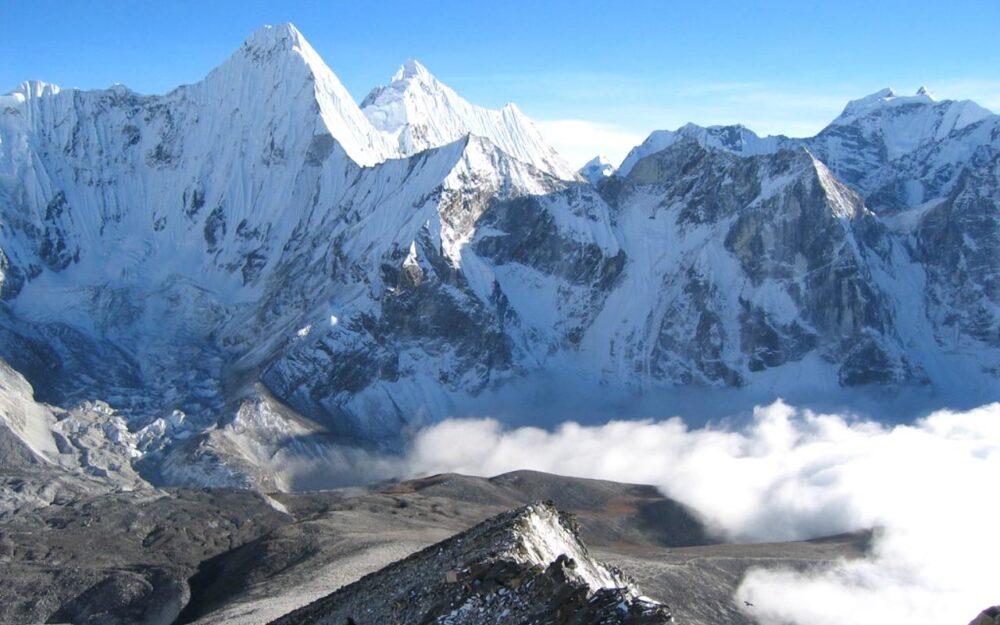
- Hear Tengboche Monastery chants below Ama Dablam’s 6,812-meter peak
- Buy yak cheese, handicrafts, and souvenirs at Namche Bazaar’s vibrant market
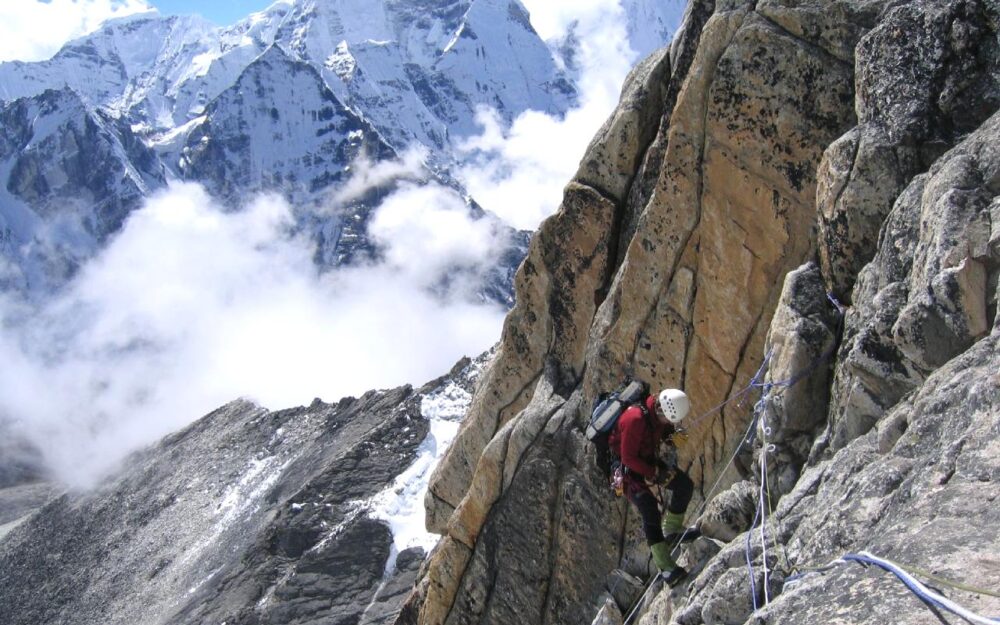
- Navigate the Southwest Ridge’s limestone section at 6,000 meters
- Witness rhododendron blooms painting the trekking trails crimson
- Follow the clockwise chorten walks, respecting Sherpa tradition
- See Everest’s south face from Nangkartshang Peak
- Attempt to summit not one but two different peaks of the Khumbu region
Overview of Island Peak and Ama Dablam Expedition – 22 days
The Khumbu Valley holds one of Nepal’s highest highland farming communities. Sherpas farm barley at 3,930 meters in Pangboche, which is a stop on the Island Peak and Ama Dablam Expedition. Solukhumbu District houses tens of thousands of people. Sixty percent are Sherpa descendants of Tibetan migrants. They settled here centuries ago after leaving the Tibetan plateau because of political unrest.
En route, there are a lot of things that will keep you engaged. Tengboche Monastery, which opened in 1916, is definitely one of them. Monks chant daily below the Ama Dablam peak at 6,812 meters, offering a religious experience. Namche Bazaar’s market sells many different interesting pieces of crafts. We also cross the Hillary Suspension Bridge, rebuilt after the 2015 earthquake.
Rhododendrons bloom from March to May under of 3800 meters, whereas Autumn delivers clear Himalayan views from Kala Patthar. You walk trails used by the 1953 Everest expedition teams. Trail markers follow routes mapped by early 20th-century explorers. Prayer flags hang above Dudh Koshi River crossings while stone chortens line every switchback. Spring and autumn see over 70% overall summit success rates per our guide’s personal experiences.
Your guide knows most of the glacier crevasses on this route. We follow the same acclimatization schedules used by professional climbers. En route, tea houses serve dal bhat below 4,500 meters. Base camps use freeze-dried meals. You sleep in barely warm tea houses at Gorak Shep near Everest’s glacial moraines.
Sonam Adventure handles permits before you land in Kathmandu. We secure Island Peak climbing licenses and Sagarmatha National Park passes. Flight delays hit about 40% of Lukla trips March-May; we monitor official and reliable weather updates hourly to keep you on track.
Your tea house rooms stay pre-booked even during uncrowded seasons, so we will prepare the accommodations in advance as well. Guides carry pulse oximeters and check oxygen levels every day and night above 4,500 meters of elevation. They enforce mandatory rest stops on summit days.
Guides speak fluent English and Sherpa, trained by the Himalayan Rescue Association, will help you with the luggage throughout the Island Peak and Ama Dablam Expedition. They know evacuation routes to the Pheriche clinic for severe cases.
Itinerary of Island Peak and Ama Dablam Expedition – 22 days
Day 01: Fly to Lukla and Trek to Phakding – 2610m; 4hrs
The Kathmandu to Lukla flight drops you at 2,840 meters above sea level. That runway slopes like a ski jump. Start walking after all the members in the group are ready to move.
The trail hugs the Dudh Koshi riverbank. Pine needles cushion your boots. Suspension bridges sway underfoot, so hold the cables tight. We cover 7.5 kilometers downhill and lose 230 meters by Phakding.
Arrive at 2,610 meters with river spray on your face. Tea house owners hand you salted butter tea. Rest your legs now, as tomorrow’s climb begins at dawn. Fill your water bottle twice throughout the first day of the Island Peak and Ama Dablam Expedition.

Duration
35 min flight & 4hrs trek
Accommodation
TeahouseMeals
B L D
Max Altitude
2840mDay 02: Phakding to Namche Bazaar – 3438m; 6hrs
Phakding breakfast fuels the Namche climb. We gain 830 meters through rhododendron thickets. River rapids echo below while we cross the Hillary Suspension Bridge; steel cables hum in the wind. The distance is 8 kilometers, and the total time taken is 6 hours.
Namche Bazaar feels like a warm hug of modernity at 3,440 meters above sea level. Sherpa women weave wool near prayer wheels.
Arrive by 2 PM and drink water like it’s your job. Market stalls sell crampons, gaiters, chocolate, dry fruits, etc. Sleep by 8 PM after a filling dinner, ending the 2nd day of the Island Peak and Ama Dablam Expedition.
Duration
6 hrs trekAccommodation
TeahouseMeals
B L DMax Altitude
3438mDay 03: Namche Bazaar Acclimatization
We stay put in Namche Bazaar today to let our bodies adapt. Altitude sickness prevention requires this crucial rest day. We hike higher mid-morning to a viewpoint near the Everest View Hotel. This short climb reaches nearly 4000 meters temporarily.
We descend back to sleep at 3438 meters, following the climb high, sleep low principle. Afternoon brings exploration of Namche’s narrow streets. Local markets sell trekking supplies, handicrafts, and warm clothing.
We visit the Sherpa Culture Museum to understand mountain life. Monasteries with colorful murals dot the hillside settlement. Many climbers gather here, sharing stories and advice. We drink extra water, eat carbohydrate-rich meals, and avoid alcohol.
Our Island Peak and Ama Dablam Expedition guides check everyone’s oxygen levels and symptoms carefully. This preparation day makes higher elevations achievable tomorrow.

Activity
Rest dayAccommodation
TeahouseMeals
B L DDay 04: Namche to Tengboche or Phortse – 3810m; 7hrs
The 6 AM alarm cuts through Namche’s chilly wind. We leave before sunrise to beat the wind. The trail climbs above the Dudh Koshi valley through silent rhododendron forests.
Your guide points out animal tracks in the mud. Cross the Pangboche suspension bridge; even the ones that are afraid of height get slightly used to it by now.
After that, steep stone steps test your calves. Tengboche Monastery appears at 3,810 meters, its prayer flags snapping in the thin air.
We arrive after 7 hours with numb fingers. Monks chant inside the gompa; incense stings your nose in a good way. You unpack gear while Island Peak and Ama Dablam Expedition guides check your oxygen levels.
Drink ginger tea to warm your core. Tomorrow’s ridge demands high energy and a well-rested body.
Duration
7hrs trekAccommodation
TeahouseMeals
B L DMax Altitude
3810mDay 05: Trek to Dingboche – 4350m; 7hrs
Dawn breaks over Tengboche’s stone walls at 3,860 meters above sea level. Trail winds past barley fields tended by Sherpa farmers. We will be descending slightly for the first 2 km of the trail.
Glaciers gleam ahead like shattered glass. Your guide tests your pulse oximeter before we hit the road. After the initial descending tracks, we will have to leisurely climb slightly uphill trails till we reach our destination of the day.
En route, you will cross many settlements, one of the notable ones is Deboche village, where we will stop for a break. After a 20-minute break, we will cross a suspension bridge with a view of Ama Dablam peak in the distance. Check your boot laces for ice buildup before bed.
Duration
7 hrs trekAccommodation
TeahouseMeals
B L DMax Altitude
4350mDay 06: Dingboche Acclimatization
Rest day doesn’t actually mean resting all day today. Your Island Peak and Ama Dablam Expedition guide wakes you up early in the morning.
After a lovely breakfast session at last night’s accommodation, we have to focus on acclimatization. Thin air burns your energy with every step as we start the acclimatization hike.
We climb slowly toward Nangkartshang Peak’s base. You push higher to 5,000 meters for acclimatization, reaching the summit of Nangkartshang. Rocks shift underfoot on the moraine. Everest’s south face glares at you from 15 kilometers away.
Return to Dingboche by noon. Tea house owners hand you roasted barley snacks. Rest your eyes; they feel gritty from the wind.
After lunch, you inventory summit gear with your team. Fingers fumble with carabiners in the cold. Drink three liters of water throughout the day to maintain a good hydration level.
Massage your calves to prevent cramps to some extent. Sleep with your warm water bottle inside your sleeping bag. Tomorrow’s Lobuche climb starts at 3 AM.
Activity
Rest dayAccommodation
HotelMeals
B L DDay 07: Trek to Lobuche – 4910m; 8hrs
Sunrise hits the Imja Valley at 5 AM, but we leave Dingboche with headlamps cutting through icy winds, two hours before that. The trail follows a glacial moraine; loose rock shifts underfoot. Your Island Peak and Ama Dablam Expedition guide warns you about altitude fatigue after 6 hours of steady climbing.
Cross the terminal edge of the Khumbu Glacier; its ice cracks beneath stone cover. The total distance is 12 kilometers with an elevation gain of 560 meters.
Arrive in Lobuche at 4,910 meters with the wind biting your cheeks. Tea house owners hand you garlic soup to boost oxygen uptake. Change socks immediately as wet feet risk frostbite.
Guides check your breathing rate before dinner. Tomorrow’s push to Gorak Shep starts before dawn as well.
Duration
8hrs trekAccommodation
HotelMeals
B L DMax Altitude
4910mDay 08: Trek to Gorak Shep- 5164m; and Everest Base Camp, return to Lobuche
We start at 4 AM for Everest Base Camp. Headlamps trace a line across the Khumbu Glacier. The trail climbs 250 meters to Gorak Shep at 5,164 meters above sea level.
We drop packs at one of the huts. Then, we walk 3 more hours across glacier debris to EBC at 5,364 meters. Climbers from other teams wave with gloved hands. We then take photos near the wooden signboard.
Return to Gorak Shep by noon, where cold numbs your toes and you can eat hot noodles fast. Descend to Lobuche in the afternoon hours, ending the 8th day of the Island Peak and Ama Dablam Expedition.
The ascending tracks are long gone, but thin air still prevails. It’s very important to keep yourself well hydrated and follow the preventive measures of altitude sickness.
Accommodation
TeahouseMeals
B L DMax Altitude
5364mDay 09: Chhukung – 4730m; 8hrs
The following day on the Island Peak and Ama Dablam Expedition begins with a breakfast at 5 AM in Lobuche. Today’s trail cuts south toward the Lhotse Face.
We descend slightly, then climb through boulder fields. Chhukung Valley opens at 4,730 meters above sea level; dry, windy, exposed. Ice from Ama Dablam’s west face towers above the village. Stone houses group together against the cold. Yak bells clang as herders pass.
You arrive with slightly cracked lips and tired lungs. Tea house rooms lack insulation, so always sleep with extra layers. Island Peak and Ama Dablam Expedition guides inspect your gloves and goggles. Tomorrow’s Island Peak Base Camp demands full gear.
Test your trekking poles, headlamp beam, and other gear tonight. Check crampon straps, as rust can be accidental on ice.
Duration
8hrs trekAccommodation
TeahouseMeals
B L DMax Altitude
4730mDay 10: Trek to Island Peak Base Camp – 5000m; 7hrs
Frost clings to Chhukung’s stone roofs at 4 in the morning. We leave before the sun clears Ama Dablam’s ridge. The trail cuts across the Lhotse Glacier moraine as sharp rocks tear at boot soles.
Your Island Peak and Ama Dablam Expedition guide tests your jumar device on fixed ropes near the icefall. The distance of the day is 6 kilometers, while the elevation gain is 270 meters.
Base Camp tents huddle at 5,000 meters above sea level under towering ice walls. Wind whips snowdrops against your goggles. Sherpas hand you lemon tea with honey to soothe raw and dry throats.
You can even boil snow for water if push comes to shove, but we do not recommend pulling this stunt off during normal days. Check harness buckles for ice jams.
Duration
7hrs trekAccommodation
HotelMeals
B L DMax Altitude
5000mDay 11: Rest Day
Altitude presses those who skip proper acclimatization and do not care for prevention. We stay at 5,000 meters above sea level to let red blood cells adapt.
Being 100% honest, there is nothing much to do at the base camp other than preparing for the climb and engaging in conversation with fellow climbers.
You eat high-carb meals: lentil stew with extra garlic and rice or bread. Drink water with electrolyte tabs (optional). If the flavor helps you gulp down the water, you can go for it all you want. Tomorrow is the most challenging day of the Island Peak and Ama Dablam Expedition.
Accommodation
TeahouseMeals
B L DDay 12: Summit to Island Peak – 6189m, back to Chhukung; 9hrs
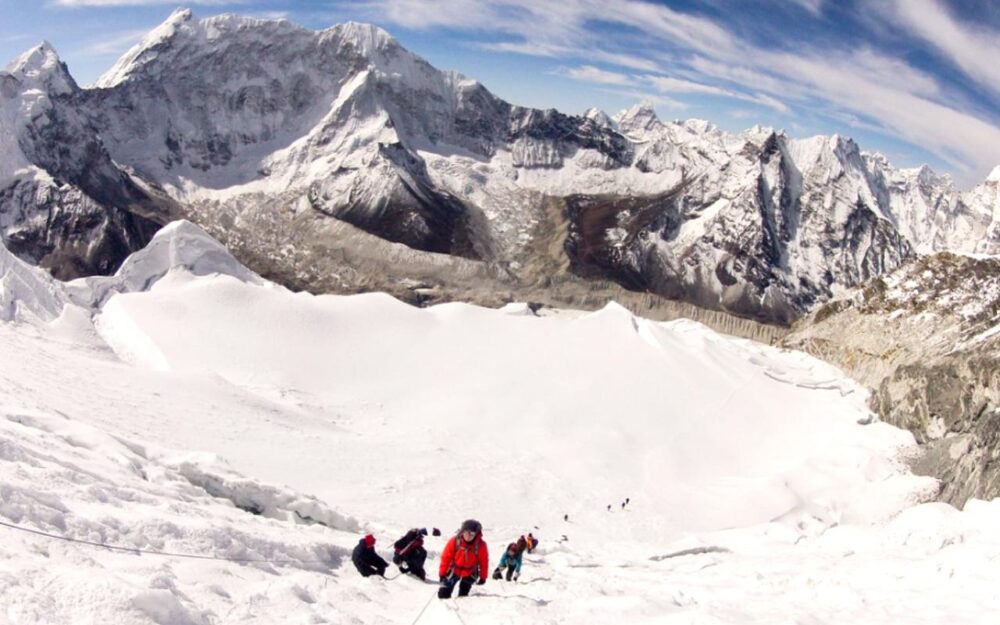
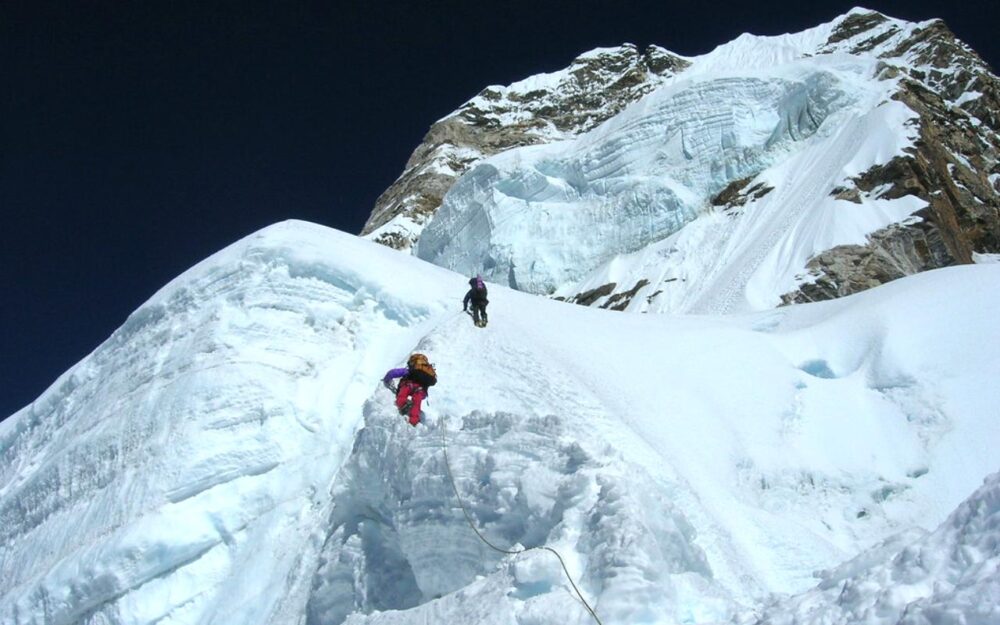
Day 12 requires us to wake up at around 3 AM. We rope up for the ice wall, steep and brittle. Fixed lines bite into blue ice above 5,500 meters.
Your jumar scrapes upward; each kick-step must hold body weight. Summit ridge narrows at 6,000 meters above sea level; wind screams at over 50 km/h.
At the end of the exhausting climb, we reach 6,189 meters. Sunrise paints Everest with a shade of gold while you snap photos. No lingering for extended periods of time, as the conditions at the peak are extreme, and we have to get back down before the afternoon winds come by.
Descend fast over the same ice. Loose snow slows your crampons throughout the descent. Arrive at Base Camp at around 8 AM with frozen eyelashes. Chhukung’s tea house waits 4 hours down the trail.
After the most physically demanding day on the Island Peak and Ama Dablam Expedition, you will obviously be tired and doze off easily.
Duration
9hrs trekAccommodation
TeahouseMeals
B L DMax Altitude
6189mDay 13: Chhukung to Pangboche or Dingboche – 3930m; 6hrs
The sun hits Chhukung at 6 AM. We descend fast to reverse yesterday’s elevation gain. The trail winds through boulder fields where ice melts off of stones.
Your knees shake on steep switchbacks as we cover a total distance of 14 kilometers. The elevation loss is 800 meters. Pangboche appears at 3,930 meters; stone houses cluster below Ama Dablam’s west face. Sherpa farmers plant potatoes in rocky soil.
We arrive with sore quads and dry lips. Tea house owners serve hot tsampa porridge. Island Peak and Ama Dablam Expedition guides check your ankle stability as weak joints risk sprains on descent.
Duration
6hrs trekAccommodation
TeahouseMeals
B L DMax Altitude
3930mDay 14: Trek to Amadablam Base Camp – 4570m; 6hrs
Pre-dawn cold bites at 5 in the morning in Pangboche. We climb toward Dughla Pass; the rocky trail cuts below Ama Dablam’s south ridge. Ice chunks hang from the glacier above.
With 9 kilometers of total distance, the elevation gain is 640 meters above sea level. Base Camp tents dot the moraine at 4,570 meters. Wind scatters snow across the valley. Sherpas hand you ginger-lemon tea to fight altitude coughs.
You will spend the rest of the day preparing for the summit attempt tomorrow as the Island Peak and Ama Dablam Expedition guide holds a briefing session.
Duration
6hrs trekAccommodation
TeahouseMeals
B L DMax Altitude
4570mDay 15: Rest Day
Altitude fatigue settles deep as we have climbed peaks and traveled many kilometers across icy and rugged terrains.
We stay at 4,570 meters to stabilize blood oxygen. Gear rehearsal starts at 8 AM; practice clipping into fixed lines on icy slopes. Sherpa instructors force slow-motion crevasse drills in deep snow. Meals at base camps are very simple and usually feature packaged or dehydrated meals.
Accommodation
TeahouseMeals
B L DDay 16: Summit Push
Weather windows dictate our moves. Island Peak and Ama Dablam Expedition guides scan forecasts hourly at Base Camp.
Day 16 features a final gear check before we load oxygen tanks. Ice walls above 5,000 meters demand precise crampon placement.
Day 17: Summit push begins at 1 AM as we traverse the Southwest Ridge; exposed rock demands constant focus. Fixed ropes wind up the path all the way to the top. Wind chills hit -25°C at 6,000 meters above sea level.
Reach the summit at dawn if conditions hold, followed by an immediate descent by 10 AM; no lingering around at risky elevations.
Day 18 is a contingency day if the weather blocks Day 17.
Day 19 is for the full descent to Pangboche. Pack all trash; leave zero traces.
Meals
B L DDay 17: Trek back to Namche Bazaar
Sunrise reveals greener valleys below. We descend 545 meters to Namche in 6 to 8 hours. The trail cuts through rhododendron forests; damp earth smells sharp. Knee braces are very useful on steep switchbacks.
Cross the Hillary Suspension Bridge at midday, where Sherpa porters pass carrying copper pots. Arrive at Namche at 3,440 meters with stiff joints.
Guides collect summit certificates for your logbook. Check the gear for damage as the trekking days are almost over. Eat carbs: dal bhat with extra rice and sleep deeply tonight.
Duration
6-8hrs trekAccommodation
TeahouseMeals
B L DDay 18: Namche to Lukla
The 9 AM departure from Namche’s stone alleys starts the 21st day of the Island Peak and Ama Dablam Expedition.
We descend 600 meters through rhododendron forests slick with morning dew. Trail pounds your knees; trekking poles are non-negotiable. En route, we will cross six suspension bridges swaying over Dudh Koshi’s rapids.
You arrive at Lukla at 2,840 meters with dust in your throat. Tea house owners hand you sweet milk tea.
Accommodation
TeahouseMeals
B L DDay 19: Lukla to Kathmandu
The last day of the Island Peak and Ama Dablam Expedition is here; the Lukla runway waits at 8 AM. Plane tires screech on the mountain slope.
You feel the drop as we lift off; valleys shrink below. The flight lasts 35 minutes. Land Kathmandu at 1,400 meters, the city vibe is vastly different, but going back to modern amenities brings back some relief.
Exchange leftover Nepali rupees, eat momos at Thamel’s street stalls, get a relaxing massage, and enjoy your day at the capital. Sleep without alarms tonight.
Duration
35min flightAccommodation
HotelMeals
BreakfastTrip Information - Good to Know
How does our trip start?
Your adventure begins with a flight from Kathmandu to Lukla at 2,840 meters. The plane lands on a steep mountain runway resembling a ski jump. You start walking within minutes toward Phakding. The trail follows the Dudh Koshi River through pine forests. Cross rattling suspension bridges over glacial waters.
Arrive Phakding at 2,610 meters by afternoon. Tea houses offer basic rooms and hot meals. Wear sturdy boots for rocky paths. Guides check your gear before dawn. This immediate immersion sets the trek’s pace.
Difficulty
The Island Peak and Ama Dablam Expedition tests endurance daily. Elevation gains reach as high as 830 meters in single climbs. Trails demand 6-9 hours of walking on rocky, icy paths. Altitude severely affects those above 3,500 meters; headaches and fatigue hit hard.
Steep sections require precise footwork on moraines and glaciers. Summit days involve technical ice climbing with ropes and crampons. Knees shake on long descents. Weather adds risk: wind chills drop to -25°C. Proper acclimatization prevents 90% of altitude issues. Success demands physical readiness and mental focus.
Best seasons
March to May offers stable skies and moderate cold. Daytime temperatures range from -5 °C to 10°C at base camps. Clear views of Everest and Ama Dablam peak during these months. September through November provides dry trails and crisp air.
Day temperatures average 0°C to 15°C below 4,000 meters. Monsoon season (June-August) brings dangerous landslides and obscured views. Winter (December-February) features extreme cold below -20°C and flight cancellations.
Altitude Sickness
Altitude triggers headaches above 3,000 meters. You feel fatigue within hours of ascent. Symptoms include nausea and dizziness; do not ignore them if they persist. Drink two to three liters of water daily; dehydration worsens symptoms.
Recognize early signs; headache plus vomiting means immediate descent. Medications like Diamox require doctor approval pre-trek, and we recommend trekkers to take it easy on the pills. Guides enforce rest stops every 50 minutes or so above 4,500 meters. Never climb higher to relieve symptoms. Descent remains the only cure for severe cases.
Accommodation, Food and Drink
Tea houses provide basic stone lodges with shared rooms. Mattresses rest on wooden planks; blankets feel thin at 4,000 meters. Solar showers cost 300 NPR; water stays lukewarm. We boil all drinking water daily; filters alone also work just fine.
Meals feature rice, lentil soup, and vegetables, largely. Portions are refillable, free to fuel your exertion. Garlic soup appears nightly to boost oxygen uptake. Breakfast includes eggs and bread by 7 AM. Sherpas cook over wood stoves, and the smoke stings your eyes.
Transportation
Kathmandu to Lukla flights use small planes on mountain runways. Landings require steep 15-degree descents onto sloped tarmac. Kathmandu airport requires a 3-hour pre-check for domestic flights. We track the weather via official and credible updates. Flight cancellations double during the monsoon season.
For inner city transportation in Kathmandu, we will use a car or a van, depending on the size of the group. Your Island Peak and Ama Dablam Expedition package does not cover your international flight expenses.
Permit
Permits begin before you leave home. You need a TIMS card and Sagarmatha National Park entry. The process takes two days in Kathmandu; bring four passport photos. Ama Dablam climbing permit requires additional dollars and a permit from the NMA. Likely, the other peaks also require their own permits.
Guides carry permit copies; show them at every checkpoint. We handle paperwork, but you need to supply documents early. Keep originals in waterproof bags.
Trip preparation and fitness
Your body should be trained months ahead of the scheduled start of the Island Peak and Ama Dablam Expedition. We build endurance with daily 60-minute hikes carrying 5 kg packs. Add stair climbing with weights twice weekly. Practice walking at least 8 hours on rocky trails weekly.
Acclimatize altitude-wise: sleep in elevation tents if possible. Pack blister-proof socks, tested on 20-mile walks. Strengthen quads with squats; weak knees fail on descents. Medical checks must clear heart and lung function.
Gadgets charging the Internet
The battery runs out fast here. Power banks (20,000mAh minimum) prove essential above 4,000 meters. Tea houses charge devices at $2 per device, cash only. Bring two power banks; cold drains batteries below freezing. Insulate gadgets in inner pockets during climbs. Wi-Fi works only in Namche and Lukla; other destinations have to rely on the Everest Internet card.
Avoid phone calls above Dingboche; the signal dies past 4,300 meters. Test all gear in cold rooms pre-departure. Carry spare batteries stored close to your skin; they stay warm. Guides carry emergency locators. Never rely on city charging habits here.
Frequently Asked Questions
Can a beginner join this trek?
No, the Island Peak and Ama Dablam Expedition are too physically demanding for beginners.
How long can I stay in Namche after the summit days?
Technically, you can stay as long as you want until your visa expires.
What is the best way to prepare for the Island Peak and Ama Dablam Expedition?
The best things to do for the trek are to prepare yourself adequately physically and pack all your necessities.
Can I rent equipment at Lukla?
Yes, you can rent gear at Lukla and even at Namche, but it will cost you comparatively more than in Kathmandu.
Trip Reviews
 Write a Review

How to book a trip?

make free inquiry

