


Annapurna Circuit Trek

Trip Duration
15 Days
Group Sizes
2-16 People
Transportation
Bus
Destination
Nepal
Max. Altitude
5,416m. / 17,769ft.
Nature of Trip
Trek
Best Season
Sep-Nov, Mar-May
Activities
- Trekking
- Sightseeing

Difficulty
Moderate
Meals
- Breakfast
- Lunch
- Dinner

Start & End Point
Kathmandu
Accommodation
- Hotel
- Lodge
Trip Highlights
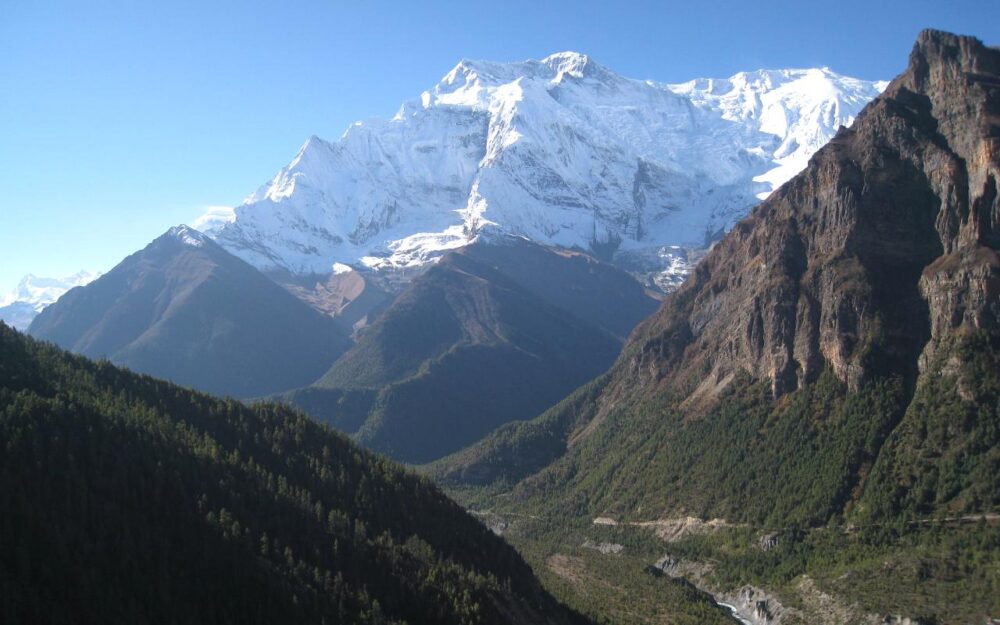
- Astonishing & Astounding views of several mountains – Annapurna ranges, Mt. Manaslu, Fishtail, Nilgiri and Hiunchuli
- One of the most popular hiking routes of the world
- Know the customs, traditions and culture of the different ethnic groups of Nepal.
- Visit some historical sites of Nepal during the Annapurna circuit trekking
- Explore and take blessings from Lord Vishnu at Muktinath Temple Kathmandu.
- See the bursting with the vibrant, red and pink blooming of rhododendrons
- Get a chance to encounter with Red Panda, Musk deer, leopards and golden species of birds.
- Witness the sparkling sunrises from Poonhill
- Admire the elegant settlements and villages of Annapurna region
- Enjoy the natural hot springs at Tatopani
- Get the panoramic views of Annapurna and Dhaulagiri from Thorong La Pass (5,416 m.)
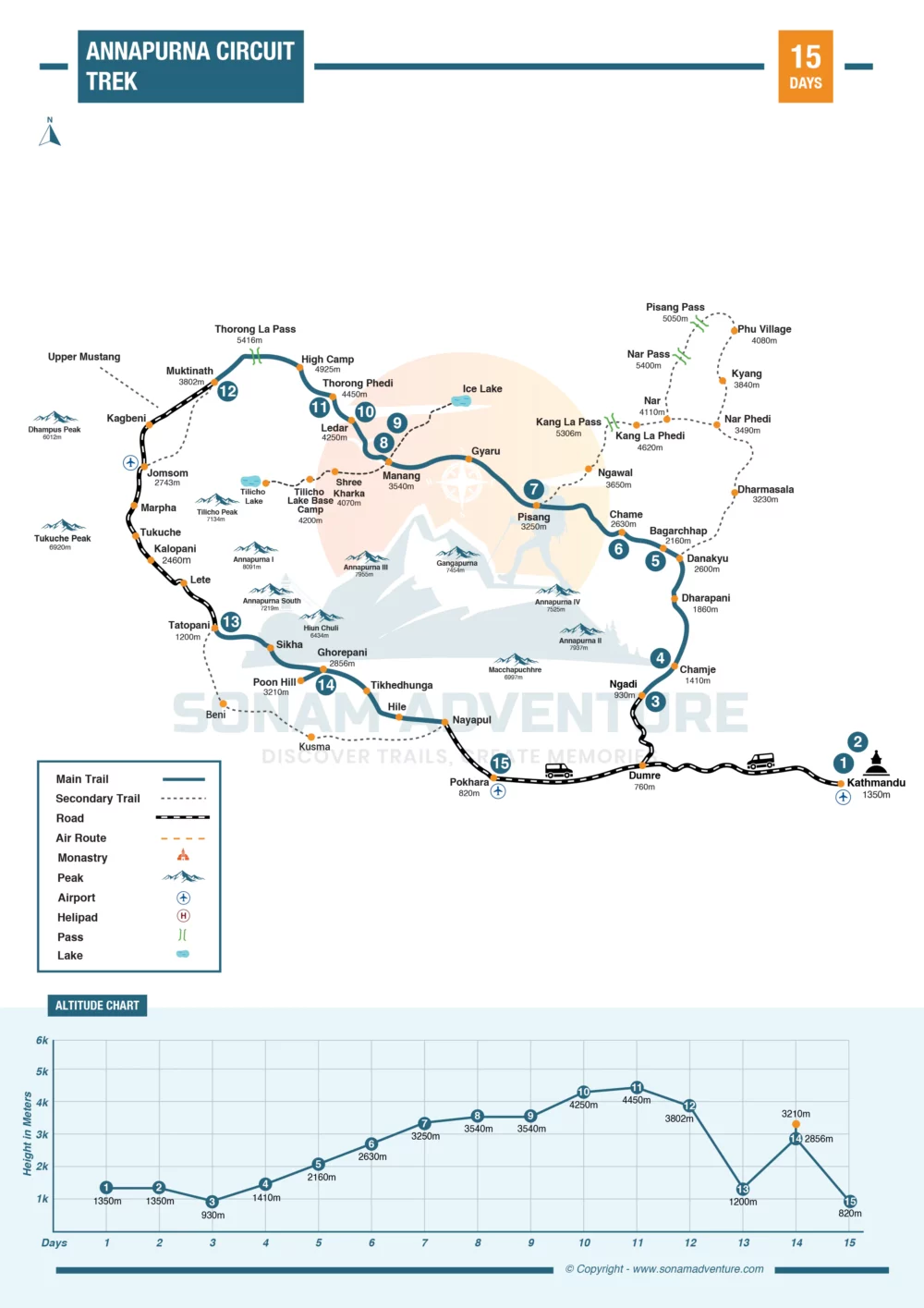
Overview of Annapurna Circuit Trek
The 15-day Annapurna Circuit trek is one of the most demanding and adventurous journeys in Nepal. The trek offers breathtaking views of snow capped mountains, stunning sceneries, diverse landscapes and cultural inbounds.
The Annapurna Circuit trek is a great option for those who enjoy long-distance trekking. This trek is also admired as “Legendary Trek of Nepal”.
Throughout the journey, trekkers will witness several mountain ranges Mt. Annapurna (8091 m), Mt, Manaslu (8,163 m), Mt. Annapurna II (7,937 m), Annapurna III (7,555 m), Annapurna IV (7,525 m), Macchapuchre or Fishtail (6,998 m), Annapurna South (7,129 m) Mt. Nilgiri (7,041) and several other peaks.
On day 12th, you’ll land your steps to the highest point of the Annapurna circuit trek, Thorang La Pass (5,416 m). This pass is challenging but equally rewarding.
You’ll be joyful by visiting Muktinath – a sacred place for Hindus and Buddhists. Furthermore, witnessing the sunrise from Poonhill will also be an unblemished feeling for you. Keep scrolling down for more information.
Itinerary of Annapurna Circuit Trek
Day 01: Arrival in Kathmandu
Welcome to Nepal. After landing in Nepal, our team representative will pick u from the airport and we’ll drive to the hotel. Upon reaching, you may relax for a while. Meanwhile, in the evening, you may stroll around the local market of Kathmandu.

Accommodation
HotelMeals
Breakfast
Max Altitude
1400mDay 02: Preparations Day
This is the second day of the trek as per the itinerary. Today we’ll prepare for our upcoming Annapurna Circuit trek. After having lunch, our team leader will brief you about the trip. You may also buy trekking gear and equipment here in Kathmandu, easily available in the Thamel market. If you have time, you may also visit some UNESCO sites in Kathmandu.
Accommodation
HotelMeals
BreakfastMax Altitude
1400mDay 03: Drive to Ngadi
After taking breakfast, we’ll approach Kathmandu Bus Park. From here, we’ll catch a bus to Ngadi. After 6-7 hours of travelling in the serene environment, we’ll reach Ngadi. Here we have an overnight stay and dinner at the tea house.

Duration
6-7 hrs drive
Distance
191 kmAccommodation
TeahouseMeals
Breakfast, Lunch & DinnerDay 04: Ngadi to Chamje
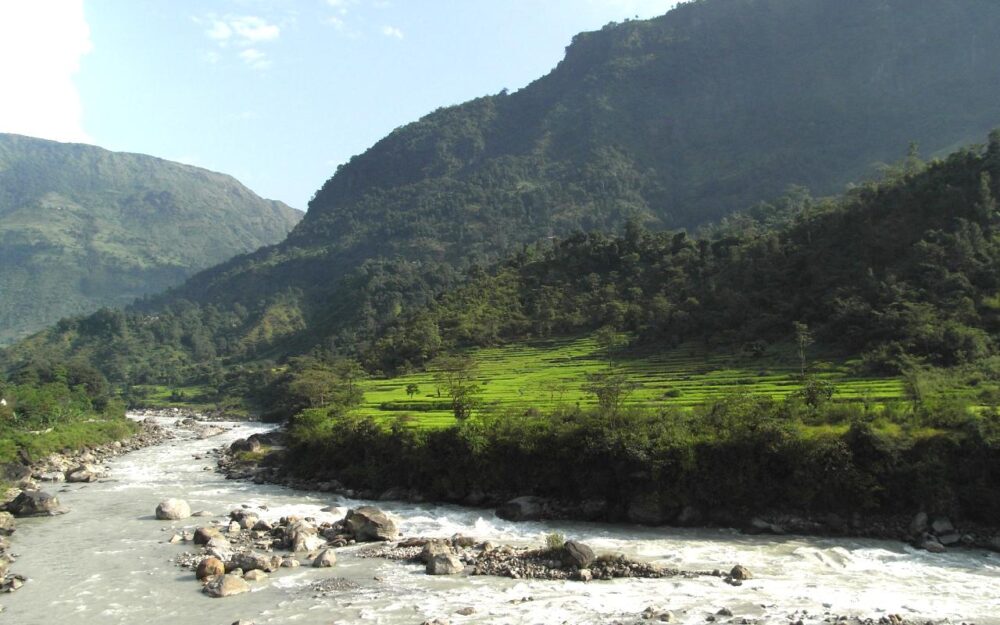
The trek from Ngadi to Chamje is relatively 5-6 hrs following a moderate trek. During our journey, we’ll witness the stunning scenery, flawless views of the Marsyangdi River, waterfalls, rivulets and backdrop of mountains.
Before reaching our fourth day destination, we’ll pass through Bahun Danda, Ghermu and Jagat. At the end of the day, we’ll stay at a comfortable tea house at Chamje.
Duration
5-6 hrs trekDistance
11 kmAccommodation
LodgeMeals
Breakfast, Lunch & DinnerMax Altitude
1410mDay 05: Chamje to Bagarchhap
We are on the 5th day of our Annapurna Circuit trek. After taking a morning breakfast, we’ll approach our leg to reach Bagarchhap.
The journey takes us through stunning terraced fields, farmlands. Furthermore, we’ll also admire the eye-catching views of rhododendron forests.
After crossing several streams, we’ll enter the Manang district. Upon passing Dharapani and several uphill and downhill climbs, we’ll reach Bagarchhap.
Duration
7 hrs trekDistance
12 kmAccommodation
LodgeMeals
Breakfast, Lunch & DinnerMax Altitude
2160mDay 06: Bagarchhap to Chame
This is the 6th of our Annapurna Circuit trek. The trek from Bagarchhap to Chame covers approximately 9-10 kilometres of distance. The altitude of Chame is 2,630 m.
After having breakfast, our trek continues. While walking, we’ll see the beautiful vistas of Lamjung and Annapurna II peaks. Furthermore, we’ll also admire the cultural village of Timang, Koto at Thanchok. We’ll reach Chame for a night’s stay and a delectable dinner.
Duration
4-5 hrs trekDistance
9 kmAccommodation
LodgeMeals
Breakfast, Lunch & DinnerMax Altitude
2630mDay 07: Chame to Pisang
The day 7th is the significant portion of the Annapurna Circuit trek. After having breakfast, we’ll leave Chame and forward our steps for Pisang.
By following a rhododendron and alpine forests, we’ll reach Bhartang and Dhukar Pokhari. Prior to that, we’ll also see rocky cliffs and some big stones like sea crag’s.
After lunch, we’ll keep the walkway and our eyes will be amazed by Annapurna II and Pisang Peak.
Before the sun goes down, we’ll reach at tea house for delicious food and a comfort sleep.
Duration
6-7 hrs trekDistance
15 kmAccommodation
LodgeMeals
Breakfast, Lunch & DinnerMax Altitude
3300mDay 08: Pisang to Manang
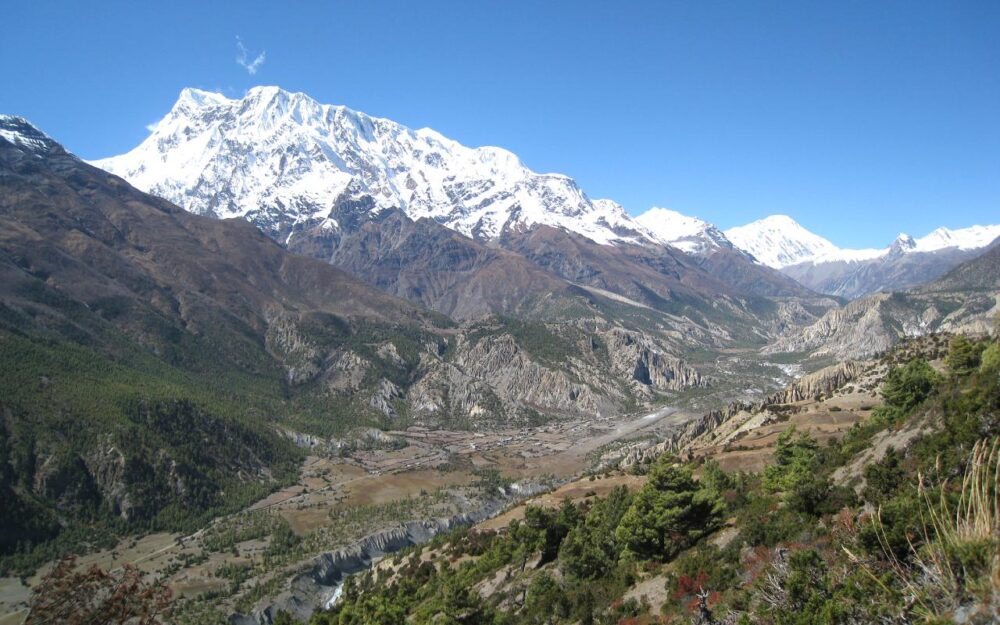
The trek from Pisang to Manang is one of the most popular routes of the Annapurna region. We’ll have several steep ascents and descents after starting our walk from Pisang.
Today, we’ll get the impeccable views of Annapurna II, Annapurna III, Annapurna IV, Lamjung Hill and several surrounding peaks.
The part of the trek is longer but quite interesting. If we are lucky enough, you may also see yaks in the mountains. Before reaching Manang, you’ll also explore Braga Monastery. It is one of the largest settlements of the Annapurna region. All kinds of facilities are available in the tea house.
Duration
6-7 hrs trekDistance
16 kmMeals
Breakfast, Lunch & DinnerMax Altitude
3500mDay 09: Acclimatization Day in Manang
Today is the most crucial day of our entire Annapurna Circuit trek. We’ll acclimatise and rest before ascending to the highest point, Thorong La.
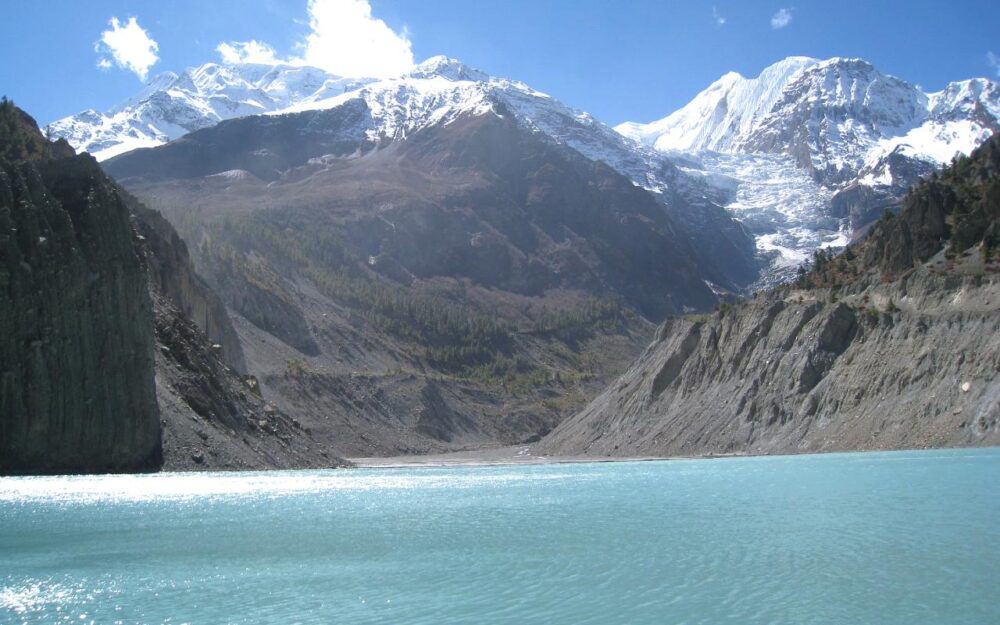
We’ll not sit here. The Majority of trekkers walk around Gangapurna Lake or explore the Braga Monastery.
You’ll get the striking views of mountains and mountains from Manang. It is a promising place to know, socialise and interact with the local people.
Accommodation
LodgeMeals
Breakfast, Lunch & DinnerDay 10: Manang to Ledar
The trek from Manang to Ledar is a moderately challenging and significant part of the Annapurna trek. It covers 9 kilometres and 4-5 hours of walking.
We have to ascend slowly and gradually. During our journey, you’ll get the astounding views of the mountains. The trail follows the Jarsang Khola and after passing Yak Kharkha, we’ll reach Ledar.
Duration
5-6 hrs trekDistance
9 kmAccommodation
LodgeMeals
Breakfast, Lunch & DinnerMax Altitude
4250mDay 11: Ledar to Phedi or High camp
The trek from Ledar to Phedi and High Camp is considered a significant part of the Annapurna Circuit trek. It involves ascents of 350-400 meters approximately.
The journey takes us around 5-6 hrs. It is necessary to maintain a moderate pace of walking because of the high altitude and the potential of strong winds.
Duration
5-6 hrs trekDistance
10 kmAccommodation
LodgeMeals
Breakfast, Lunch & DinnerMax Altitude
4600mDay 12: Phedi to Muktinath (3,710 m) via Throng-La pass
The day 12 is most challenging and equally rewarding. Today, we’ll reach the highest point of Annapurna ranges and the world’s longest pass: Thorong La.
After taking a breakfast, we’ll climb to Thorona La (5,416 m). From the top of the point, you’ll get the flawless views of Annapurna range, Dhaulagiri Range, Nilgiri and several other peaks.
Upon spending some time, we’ll drive our feet towards Muktinath – the most sacred Hindu temple of Nepal. Here, we’ll also take hot showers 108 taps/sprouts. We’ll overnight stay and a dinner.
Duration
6-7 hrs trekDistance
16 kmAccommodation
LodgeMeals
Breakfast, Lunch & DinnerMax Altitude
5416mDay 13: Muktinath to Tatopani on Local bus
The day 13th is also a significant part of the Annapurna region trek. Today, we’ll be involved in a bus journey from Muktinath to Tatopani covering a distance of 71 km.
After reaching here, you may have hot springs at Tatopani. We’ll have a delicious meal tonight.
Duration
2-2.5 hrs trekDistance
71 kmAccommodation
LodgeMeals
Breakfast, Lunch & DinnerMax Altitude
1190mDay 14: Tatopani to Ghorepani
The trek from Tatopani to Ghorepani is considered as a moderate trek. We’ll hike typically 5-6 hrs by following the distance of 16 kilometers.
During our journey, we’ll witness the rhododendron forests, charming villages, terraced farmlands, diverse landscapes and many more. At the end of the day, we’ll reach Ghorepani.
Duration
5-6 hrs trekDistance
16 kmAccommodation
LodgeMeals
Breakfast, Lunch & DinnerMax Altitude
1197mDay 15: Trek to Poonhill – trek to Ghorepani and Nayapul – back to Pokhara
We’ll wake before the dawn. After hiking for more than an hour, we’ll reach Poonhill. From the top of this hill, we’ll get panoramic views of the Annapurna and Dhaulagiri Ranges.
After a while, we’ll trek down to Ghorepani. Here, we’ll take a breakfast and rest for a while. We then forward our steps to Nayapul. Upon reaching, we have three hours of drive to Pokhara.
Duration
6-7 hrs trek / 3 hrs driveAccommodation
HotelMax Altitude
822mTrip Information - Good to Know
Annapurna Circuit Trek & its Difficulty Level
The Annapurna Circuit trek is generally regarded as a moderately difficulty trek. One should have a fortune level of fitness to accomplish it.
The trekkers have to walk 6-7 hours and 7 to 14 kilometers per day; so you can cover the distance within two weeks or fifteen days.
The Thorang La Pass, the highest point of the trek, has an elevation of 5,416 meters. It can be challenging for the hikers.
The difficulty level of the Annapurna Circuit Trek is determined by several factors. It includes terrain and trails, distances, changing weather conditions, food and accommodation services during the trek and many more.
The trekkers should engage in physical training and cardiovascular exercises before the trek. Furthermore, ascending slowly, steadily, and acclimatizing play a crucial role in the accomplishment of the trek.
How will be my day & Expectations: Annapurna Circuit Trek
The Annapurna Circuit trek is a moderate to challenging trek. It is a promising way to experience the mountains in Nepal. The trek will conclude in 15 days.
In the everyday walking journey, you will have new adventures, experiences & exciting activities. Your trek will be flawless by seeing the sky touching mountains, diverse landscapes, challenging terrains, varied flora & fauna, wildlife animals and the beautiful rhododendron forests.
Your usual day will start with having a morning breakfast at the tea houses/lodges. Upon that, we set out for a hike. After walking for some hours, we’ll have our lunch in the serene atmosphere. Later on, our trip starts and it will continue till we reach our next destination, as per the itinerary.
Is Annapurna Circuit Trek possible for the beginner’s?
Yes, the Annapurna Circuit trek is quite feasible for beginners. It is challenging but equally rewarding. Even fresher can accomplish this trek. However, you should have a sound level of fitness. Furthermore, you also need a proper plan & preparations.
The trekker should be set and prepared for the narrow ridges, steep trails, river crossing and unpredictable weather conditions. The trek also involves significant altitude gain. Therefore, altitude sickness can be a big concern during the trek.
Before the trip, trekkers should engage in cardiovascular training at least 5-6 weeks before the trip. Furthermore, they may also take part in some extra activities like cycling, swimming and jogging.
We Sonam Adventure also provide experiences and trained guides to the beginners.
Preparations for the Annapurna Circuit Trek
The 15 days Annapurna Circuit trek wills you to the depth of Himalayas. On 12th day, you will land your steps at the highest point, Thorong La Pass. On a daily basis, you have to walk around 6-7 hours continuously.
To embark and successfully conclude Annapurna, one must need proper plan & preparations.
One must take part in the cardiovascular exercises like jogging, running, swimming at least 5-6 weeks before the trip.
The trekker has to walk on diverse range of terrains. Therefore, one must have good physical fitness.
Acclimatization is essential. If possible you may also involve in the altitude trekking training. The trekker’s should pack all significant things before the trek. Here are some points that may be crucial for the hikers.
- Take part in running, cycling and swimming some weeks before the trip
- Build your strength and endurances through pushups, planks and squats
- Stay Hydrated during your trekking journey.
- Be aware of nausea, vomiting, dizziness and altitude sickness during the trek
- Avoid the trek if you have any issues of asthma, bronchitis or shortness of breath.
Altitude Sickness & Overcomes
The Annapurna ranges are the 8th highest mountains of the world. Altitude Mountain Sickness could be a major issue during the trekking.
The trekkers have to reach 5,400 meters above. As a result, headaches, nausea, vomiting, shortness of breath kind of symptom seen among the hikers.
Here are some significant and preventions that surely fruitful for the trekker’s.
- Stay hydrated during the trip
- Have healthy & balanced foods during your journey.
- Acclimatization is extremely significant.
- Consult your doctor before starting the trek
- Pack all your appropriate gears
- Do not rush: take your steps slowly and gradually.
Annapurna Circuit Trek: Ideal Time
Most people choose spring & autumn for the Annapurna Circuit trek. Here are the details.
Spring (March to May) – The Spring is the peak season for the Annapurna circuit trek. During these times, there is a warm and longer day. Furthermore, you will see the rhododendron aka लाली गुराँस in full blooms.
In the month of May, there may be a little chance of rain. Therefore, you should prepare in full gear. Don’t forget to bring camera and accessories for the best photo and video shoot.
Autumn (Sep-Nov) – The autumn is the first choice of the hikers for trekking in the Annapurna circuit. The monsoon has just ended. There is no chance of rain in October & November. As a result, the weather is cool & stable. You will feel a little colder in the morning and late evening. During this time, the Nepalese celebrated their major festivals Dashain & Tihar.
Winter (Dec-Feb) – The winter is not a favourable choice for the Annapurna circuit trek. You may trek till December. However, in January due to the heavy rainfall, the routes of Thorong La Pass may be blocked.
The heavy snowfall, icy trails and extreme coldness may be troublesome for the trekkers.
Monsoon (June-August) – The monsoon is the last best option for the Annapurna circuit trek. There is a massive probability of landslides, uncertain floods and unstable mudflow in this area. Avoid this season, if possible.
Accommodations services – Annapurna Circuit Trek
While making your way through the Annapurna Circuit trek, accommodations play a crucial role.
After the trek starts, you will primarily reside in the tea houses. When you are in Kathmandu or Pokhara, you’ll stay in 3-4 star hotels. You’ll have a luxury experience by having the facilities of supportive staff, an in-house restaurant, spas, swimming pool, room services and many more.
The more you climb upwards. Your services turn out to be elegant to basic. During the trek, you have to stay in tea houses. While staying there, you have shared rooms with twin beds, shared bathrooms (squat toilets) and communal dining. You may have to pay for hot showers and gadget charging at the higher altitudes.
Food & Meals Availability
You’ll have the variety of options during the Annapurna circuit trek. Usually, we serve meals three times a day – Breakfast, Lunch & Dinner. Here are the details.
Nepali Cuisine – The Nepali cuisine is famous during the trekking in Nepal. The traditional Dal, Bhat, Tarkari aka Rice, Lentils and vegetables, you will easily available for the traveler’s. You may also add chicken, mutton or buffalo meat to make more delicious.
Continental and International Cuisine – During the trek, you may also enjoy continental and international cuisines. The meals includes: pasta, noodles, fried rice, mo:mo (dumplings), pancakes, sandwiches and some other dishes.
Snacks and Energy Foods – Annapurna circuit is a two weeks long journey. It would be better, if you have chocolates, cookies, energy bars, nuts and dried fruits. These food products are easily available in Kathmandu.
Aside from this, fresh fruits like apple, banana, oranges is easily available in the tea houses and small shops in the Annapurna region.
Annapurna Circuit Trek Permits & Fees
Annapurna Circuit trek is one of the most thrilling and adventurous journey of Nepal. To conclude the trek – you need couple of permits.
Trekker’s Information Management System (TIMS) – A TIMS is a common permit you need to obtain to trek any region in Nepal. It has two variations
- Solo Permit
- Group trek permit
For solo permit you have to pay around 2000. Similarly, for the group permit, you need to pay 1000 NPR.
Annapurna Conservation Area Permit (ACAP) – The ACAP permit is mandatory for the trekkers to enter the Annapurna region. The cost is 3000 for foreigners and NRS 1000 for SAARC nationals.
You can easily obtain these permits at the Nepal Tourism Board Pokhara or at the Annapurna Conservation Point.
Travel Insurance & its necessities
Travel Insurance is necessary and essential for the trekker’s. This time you are going for 15 days of the Annapurna Circuit trek. During this journey, you’ll have to pass through rugged terrains and slippery paths. Furthermore, the high-altitude walking may lead you to the altitude sickness and other several other health issues.. Moreover, one may also get affected by the natural calamities like flood, landslides and other severe problems. Here are some points that glances the importance of travel insurance
- Evacuations from helicopter in emergency
- Cover all your health expenses
- Peaceful and pleasant traveling
- A complete solution to your financial expenses
- Covers all your money if fight delayed or cancelled
- Return back all your money; if trip is cancelled.
Frequently Asked Questions
What is the promising time for Annapurna Circuit trek?
The best time for the Annapurna circuit trek is spring (march-may) and autumn (sep-nov) when the weather is cool & mild.
What is the highest point of Annapurna Circuit Trek?
The highest altitude of the Annapurna Circuit trek is 5,416 meters – Thorong La Pass.
Is the trek is accomplishable?
A big Yes. With good health and proper training; even fresher can accomplish this trek.
Do I need a guide during the trek?
The guide during the Annapurna circuit trek is highly recommended. They will help you with the navigation. Further, they have in-depth knowledge of the routes and destinations.
Can I find ATM centre’s during my trek?
Yes ATM centres are widely available when you are in Katmandu and Pokhara.
What permits are requires for the Annapurna Circuit trek?
You need two permits: ACAP – Annapurna Conservation Area Permit and TIMS – Trekker’s Information Management System.
Is 15 days Annapurna Circuit trek is sacred trip?
Yes, during the journey, you’ll get a chance to take a blessing from Lord Vishnu at Muktinath (3,710 m.) – the sacred place for Hindus and Buddhists.
Trip Reviews
 Write a Review

How to book a trip?

make free inquiry

