

Island Peak Climbing

Trip Duration
16 Days
Group Sizes
2-16 People
Transportation
Flight
Destination
Nepal
Max. Altitude
6,160m. / 20,210ft.
Nature of Trip
Trek
Best Season
Sep-Nov, Mar-May
Activities
- Trekking
- Climbing
- Sightseeing

Difficulty
Moderate
Meals
- Breakfast
- Lunch
- Dinner

Start & End Point
Kathmandu
Accommodation
- Hotel
- Teahouse
Trip Highlights
- Be the part of one of the most rewarding trekking of Nepal
- A scenic flight from Kathmand to Lukla
- Explore the ancient monastery – Tengboche
- Learn the culture, customs and traditions of Sherpa community
- Explore diverse landscapes, mountain valleys, rhododendron forest, wildlife animals, flora & fauna
- Admire the elegant and charming villages in the Khumbu region
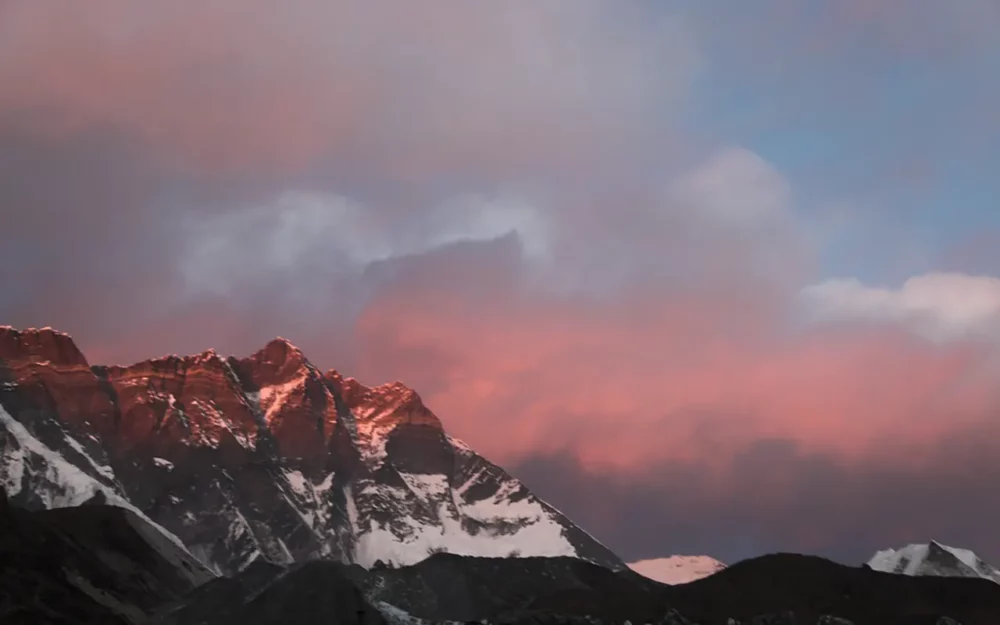
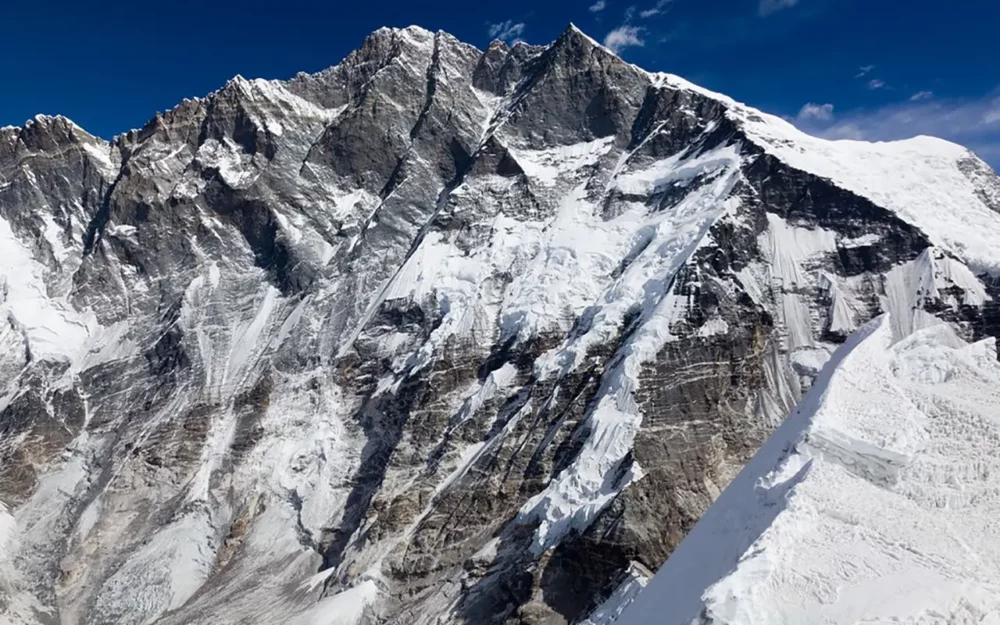
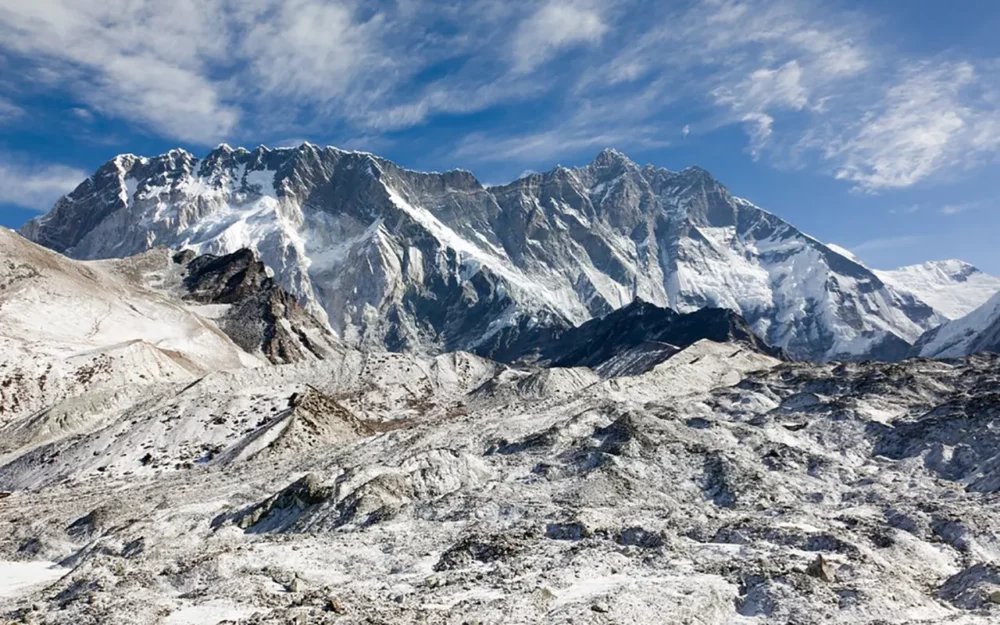
- Striking views of mountains like Lhotse, Nuptse, Ama Dablam, Makalu, Mt. Everest
- Visit the Vibrant city and the gateway of the Everest – Namche Bazar.
Overview of Island Peak Climbing
Island Peak Climbing is one of the most amazing, demanding and adventurous journeys for the trekkers. It is also known as Imja Tse and is one of the highest peaks in the world (6,120 m.).
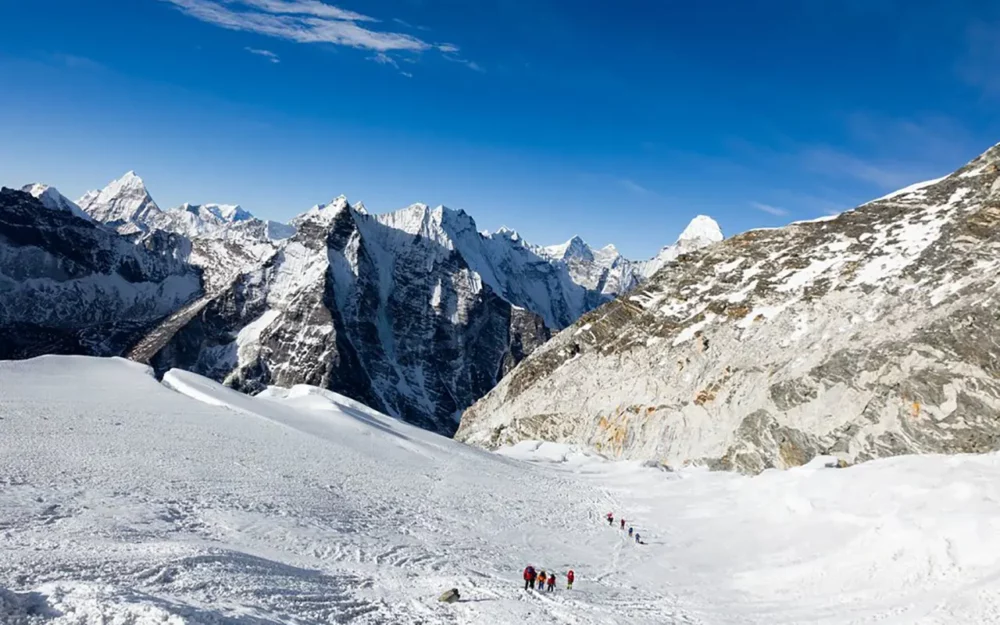
The Island Peak Climbing offers you stunning views of several mountains including Lhotse, Nuptse, Ama Dablam, Makalu, Mt. Everest and several other peaks. Furthermore, you’ll also be able to learn the cultural values of the Sherpa community.
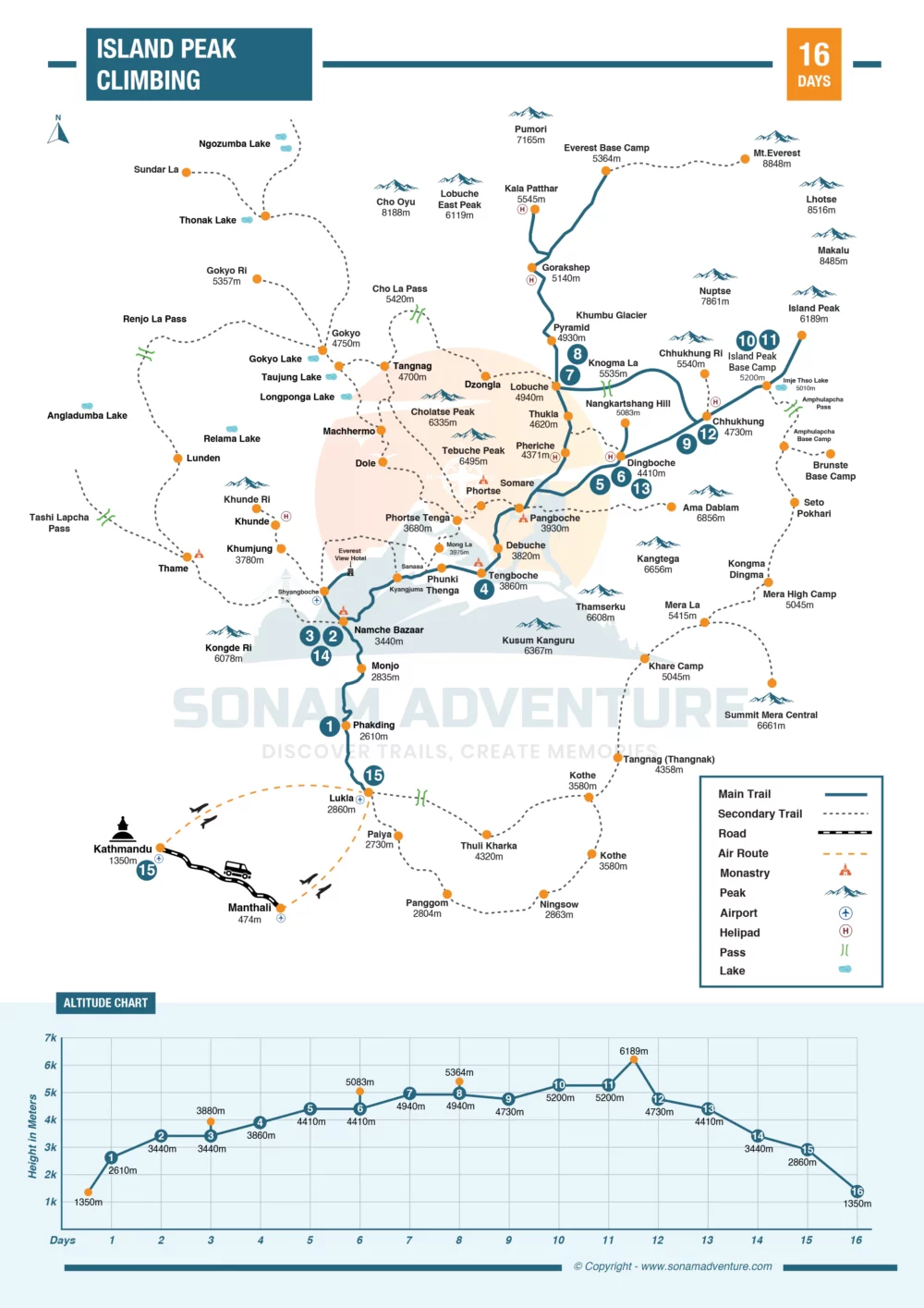
Your trip starts with a scenic flight from Kathmandu to Lukla. You will walk a short trek to Phakding. Subsequently, upon that, you’ll visit several elegant settlements, passing through rhododendron forests, and admiring the serene environment and beautiful rhododendron forests. Eventually, your journey will conclude in sixteen days.
We the Sonam Adventures designed the Island Peak Climbing package for 2025 & 2026. Keep scrolling down for more trip information.
Itinerary of Island Peak Climbing
Day 01: Fly to Lukla and Trek to Phakding
We have an early morning scenic flight from Kathmandu to Lukla. At the airport, we’ll be introduced by our guide and porter. Following breakfast, our trek begins. Today’s trek will be short and relatively moderate, covering approximately 4 hours. After reaching Phakding, we’ll have a night stay and a dinner at the tea house.

Duration
4 hrs trek
Accommodation
TeahouseMeals
Breakfast, Lunch & Dinner
Max Altitude
2610mDay 02: Trek from Phakding to Namche Bazar
The trek from Phakding to Namche is moderately challenging. It takes around 6 hrs to accomplish 10 kilometres of hiking. On the second day, we’ll gain an elevation of 828 meters.
During the trek, we’ll get impeccable views of striking mountains, including Thamserku and Kangtega. Further, we’ll walk through the lush green forests over the suspension bridges.
After 6 hours of journey, we’ll reach Namche. It is the most vibrant place in the Everest region.
Duration
6 hrs trekAccommodation
TeahouseMeals
Breakfast, Lunch & DinnerMax Altitude
3438mDay 03: Acclimatization at Namche Bazar
We will spend a day and take a rest at Namche Bazar on day 3. It is a paradise place of the Khumbu region. It is famous for its vibrant atmosphere, luxurious resorts, unique restaurants & cafés.
On day 3, we’ll hike to Syangboche Airport and Everest View hotel. From Everest View Hotel, you’ll get 360-degree views of stunning peaks and mountains.
Accommodation
TeahouseMeals
Breakfast, Lunch & DinnerMax Altitude
3440mDay 04: Trek from Namche to Tengboche
After an early morning breakfast at Namche, our trek continues. While trekking, we’ll see mesmerising views of Everest, Lhotse, Nuptse and Island Peak.
The fourth day trek will be challenging. However, we’ll get the perfect views of the Himalayas. Furthermore, we may also interact with musk deer, Himalayan tahr, sloth bears and some other wildlife animals.
We’ll further move our legs ahead to the Dudh Koshi River. After passing the alpine forest, we’ll reach Phunki Thenga. As we travel ahead and upwards, we’ll reach Tengboche. In this place, you’ll see the oldest and biggest monastery of Buddha.
Duration
5-6 hrs trekAccommodation
TeahouseMeals
Breakfast, Lunch & DinnerMax Altitude
3810mDay 05: Trek to Dingboche
On the fifth day, we’ll continue our trek till we reach Pangboche. After adoring elegant villages, chortens, and rhododendron forests, we’ll get to see the striking views of Island Peak.
Lately, we’ll enter to Imja Valley following the Lobuche River. Upon that, we have been climbing upwards towards Dingboche. We have an overnight stay and dinner at the tea house.
Duration
7 hrs trekAccommodation
TeahouseMeals
Breakfast, Lunch & DinnerMax Altitude
4350mDay 06: Acclimatization at Dingboche
We have a second crucial acclimatisation at Dingboche. By tomorrow, our path will be more challenging and tough. Therefore, we’ll take another rest day on the sixth day of the trek.
After taking a food, we may hike to Nangkarthsang Peak and explore around it. Today, we will hike high and sleep low. These help our body to balance the higher altitudes and minimise the chances of altitude sickness.
Accommodation
TeahouseMeals
Breakfast, Lunch & DinnerMax Altitude
4410mDay 07: Trek to Lobuche
The trek to Lobuche from Dingboche is a major portion of the Island Peak Climbing. The elevation gain is 500 meters above.
On day 7th, the trekkers should move slowly and gradually because the trails are rough terrain and rocky moraine. Throughout the trek, we’ll see impeccable views of Ama Dablam, Khumbu Glacier and other surrounding mountains. We’ll have the overnight and dinner in Lobuche.
Duration
8 hrs trekAccommodation
TeahouseMeals
Breakfast, Lunch & DinnerMax Altitude
4910mDay 08: Trek to GorakShep and Everest Base Camp, returns to Lobuche
Today, we’ll have long days of trekking. We’ll start before dawn. After getting ready, we’ll trek to Gorakshep. Upon getting there, we’ll hike to Everest Base Camp. The walk is strenuous. Further, we have to face strong winds while climbing to Everest Base Camp.
After reaching Base Camp, we’ll have panoramic views of mountains like Mt. Everest, Ama Dablam, Pumori, Nuptse and other surrounding mountains. Meanwhile, after a while, we’ll return to Gorakshep and have some refreshments and meals. Upon that, we’ll drive our feet to Lobuche and prepare for the next day’s trip.
Duration
7-8 hrs trekAccommodation
TeahouseMeals
Breakfast, Lunch & DinnerMax Altitude
5164mDay 09: Trek to Chhukung
The ninth is a significant portion of the Island Peak Climbing. Today, we’ll trek to Chhukung from Lobuche.
While trekking, we’ll encounter varied terrain and high altitudes. Furthermore, the Kongma La Pass will be strenuous due to the icy and steep trails. The trek is expected to accomplish in 7-8 hrs.
Duration
7-8 hrs trekAccommodation
TeahouseMeals
Breakfast, Lunch & DinnerMax Altitude
4730mDay 10: Trek to Island Peak Base Camp
From Chhukung we ascend upwards and north side by following the moraines of Lhotse Glacier. Subsequently, we’ll continue walking on a managed trail and reach Amphu Labtsa. Upon that, we have to follow a crisscross path to reach the Island Peak Base Camp. After reaching here, we’ll reside in a tented camp and prepare for the 11th day of trekking.
Accommodation
Tented CampMeals
Breakfast, Lunch & DinnerMax Altitude
5000mDay 11: Rest Day & third Acclimatization
On 11th day, we’ll take a rest and acclimatize our body for the final pushing ourselves to the Island Peak. Today, we’ll take a short training assist by the guide and the team leader. We’ll make our climbing gear ready such as ice axes, ropes and climbing boots.
Accommodation
Tented CampMeals
Breakfast, Lunch & DinnerDay 12: Summit to Island Peak – back to Chukung
Today is the toughest and most significant day of our entire Island Peak Climbing. To beat the winds and the inclement weather, we’ll start early in the morning.
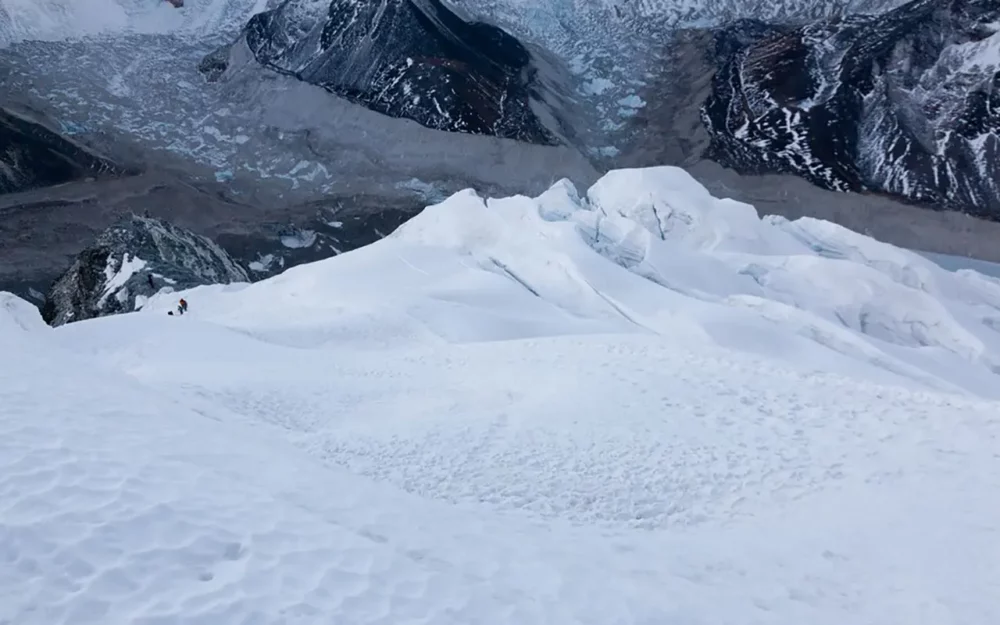
While trekking to Island Summit, we’ll get narrow ridges, then icy trails. Once reaching the top, you may relax and enjoy the amazing views of Lhotse, Makalu, Mt. Everest and other peaks. Don’t forget to bring a camera. After spending some quality time, we’ll trek down to base camp and finally take a short downward hike to Chhukung to spend the night.
Duration
9 hrs trekAccommodation
Tented CampMeals
Breakfast, Lunch & DinnerMax Altitude
6189mDay 13: Chhukung to Dingboche
After having an early morning breakfast, our trail continues. Today, we’ll take a journey from Chhukung to Dingboche. It takes around 6 hours to reach our thirteenth-day destination. After reaching Dingboche, we have a night’s stay at the tea house.
Duration
6 hrs trekAccommodation
TeahouseMeals
Breakfast, Lunch & DinnerMax Altitude
3930mDay 14: Trek Dingboche to Namche Bazar
The trek from Dingboche to Namche Bazar is relatively easy. It takes around 5-6 hours of hiking, covering a distance of 9-10 kilometres.
You’ll have a “WOW” feeling during the trek. Furthermore, the backdrop of Ama Dablam makes your trip unforgettable. At the end of the day, we’ll have delicious food and a comfortable bed to sleep on.
Duration
5-6 hrs trek
Distance
9-10 kmAccommodation
TeahouseMeals
Breakfast, Lunch & DinnerMax Altitude
3440mDay 15: Trek to Lukla from Namche
I hope you all are enjoying the trek. Today is the last day of the trek. The hike from Namche to Lukla is easy going but takes around 6-7 hours, depending on our pace and walking.
We’ll have an easier descent. During walking, we’ll enjoy beautiful views and admire the elegant & charming villages of the Sherpa.
At the end of the day, we reside at the hotel or tea house of Lukla.
Duration
6-7 hrs trekAccommodation
TeahouseMeals
Breakfast, Lunch & DinnerMax Altitude
2860mDay 16: Fly Back to Kathmandu
After having a morning meal, we’ll return back to Kathmandu in a scenic flight.
Accommodation
HotelMax Altitude
1400mTrip Information - Good to Know
How will be the day during Island Peak Climbing?
Island Peak Climbing is one of the most remarkable Himalayan journeys and is regarded as a moderate trek. It’s challenging but achievable.
The astonishing trek will conclude in 16 days. Every day of hiking, you’ll have new experiences, fun, and adventurous activities. You will get the opportunity to see sky-touching mountains, diverse landscapes, glacier travel, and many more.
Your usual day starts with by taking an early morning breakfast at the tea houses. Lately, we’ll forward our steps for hiking. After walking for some hours, we’ll have lunch. Our trip will continue till the sun goes down. Meanwhile, after that, we’ll have comfort food and a relaxing bed at the tea house.
Difficulty level – Island Peak Climbing
Island Peak Climbing is regarded as a moderate trek. It’s challenging but equally possible. It is also called a training peak for beginner mountaineers.
The trekker has a good level of fitness to conclude the trek. You have to carry a 5-7 kg backpack and walk 6-7 hours daily. You’ll reach the summit of 6,189 on day 12th. It will be quite challenging for the trekkers.
The difficulty level of the Island Peak climbing is affected by several factors. It includes: rough terrain, rocky paths, snowy glaciers, unstable weather conditions and long days of walking.
To conclude the trek, one must have proper climbing gear. Further, he/she should engage in cardiovascular training & activities before the trip.
Is Island Peak Climbing possible for the beginners?
Island Peak Climbing is suitable and appropriate for beginners. It’s not like walking in the park. However with proper planning & preparation you’ll accomplish the trek.
The first thing is – you must have sound health and a good level of fitness. Second, you must engage in cardiovascular training like cycling, jogging, and swimming at least 7-8 weeks before the trip.
During the trek, you have to reach above 6100 meters. Furthermore, narrow ridges, snowy paths, altitude gains, and uneven weather conditions play a crucial role during the journey.
Acclimatization is also significant. Above all, you may also carry a bag pack weight of 5-6 kg and walk 2-3 hrs as a practice before the trekking. Aside from this, Sonam Adventure always assists and also offers experienced and professional guides to our clients.
Preparations for the Island Peak Climbing
Before starting the outstanding trip of Island Peak Climbing; you must be concerned about your physical and mental health. On day 12th, you will land your feet above 6,100 meters. Further, you have to walk 6-7 hours per day as per our itinerary.
To accomplish the trek, you must need a precise plan, preparation and perfect execution.
Before training, one must take part in cardiovascular training like swimming, jogging, running and other exercises. Due to the high-altitude terrain, acclimatisation is extremely significant during the trek. Therefore, we also recommended taking your laps slowly and gradually without being in any hurry. Here are some significant points which will be helpful
- Engage in running, cycling, swimming and other physical activities at least 2 months before the trip
- Carry a bag pack weight of 5-6 kg and walk 2-3 hrs
- Build your strength and endurances through pushups, planks and squats
- Stay hydrated
- Keep a small first aid kit box in your bag pack
- Consult your doctor before the trek
- Avoid the trek; if you have any several health problems.
Island Peak Climbing & Altitude Sickness
Island Peak Climbing is one of the most demanding and rewarding treks of Nepal. However, altitude sickness is serious issue for the trekker’s during trekking. The 16 days mountain journey takes you above 6100 meters. As a result decrement in oxygen level. There is a chances of acute mountain sickness, nausea, vomiting, headache and other stern health problems.
Besides this, the hikers may also affected by sudden weather changes, storm’s and extreme temperatures.
It says Prevention is better than Cure. Here are safety measures that make your trek flawless.
- Allow your body to adjust with the unstable weather
- Take your steps slowly and gradually
- Stay hydrated during the trek by drink plenty of water, fluid & juices
- Take all your appropriate gears, clothes, and equipments
Accommodation during Island Peak Climbing
You will stay in 3-4 star hotels or luxurious resort when you are in Kathmandu and Pokhara. It will offer the facilities of 24-hour room service, free laundry, in house-restaurant, spas, swimming pool, and conference rooms.
After the trek start, your facility turns elegant to basic. You have to stay in a tea house. It will provide you with limited service. However, you may also socialize with the local Sherpa people.
While staying in the tea house, you’ll have twin rooms, shared bathrooms and communal dining. Aside from this, you may also have to stay in a tented camp at the higher altitudes during the trek.
Availability of Food & Meals
While trekking in Nepal; you will get variety of food & items in forms of lunch, breakfast, snacks & dinner. Here are all the details.
Breakfast Meal– It is the first meal of the day. Usually, we serve breakfast around 7-8 am. During the Island Peak Climbing, you will get delicious food & items. Here are the menus.
- Toasted eggs
- Breads
- Pan cakes
- Omelets
- Chapati & Vegetables
- Corn flakes
- Sel roti
Lunch & Dinner – You need an ample amount of energy during trekking in Nepal. This time you are going for the 16 days long Island Peak Climbing. You certainly need food that contains high dietary fiber, proteins and lots of carbohydrates. Here are all the lists and menus.
- Dal Bhat, Tarkari (Rice, Lentils & Vegetables)
- Chowmeen
- Vegetables Soups
- Mo:Mo Dumplings
- Chapatti, Lentils & Seasonal vegetables
- Spaghetti
- Pizza & Burgers
Aside from this, you may also put some dry fruits, cashew, energy bars and chocolates in your carry bag during the trekking.
The ideal time for the Island Peak Climbing
Island Peak, occupies the elevation of 6189 meters, one of the majestic peaks in Nepal. During the trek, you’ll have stunning views of several mountains & peaks. However, you choose right time for climbing.
Spring (March-May) – The Spring is the first and the peak season for trekking in Nepal. During this time, you’ll get stable and mild weather. Further, clear skies and moderate temperatures make it ideal for climbing.
During the trekking, you’ll also be glad to see the adoring rhododendrons. Aside from this, there are lower chances of rain making it ideal for trekking.
Autumn (Sep-Nov) – The Autumn that covers September to October is a promising time for the Island Peak trek. The monsoon has ended. There are no chances of rain in October & November. Aside from this, you’ll get clear skies, vibrant scenery and excellent weather that make it perfect for trekking.
Winter (Dec-Feb) – Island Peak Climbing is quite possible in winter. However, you have to undergo some challenges due to extreme low temperatures, heavy snowfall, and strong winds. The climbers should be well experienced to trek from December to February.
Monsoon (June, July & August) – Monsoon is not regarded as perfect time for trekking. We are trekking through deepest region’s of Himalayas in Nepal. It is advisable to everyone trekking during rainy season is not a good idea. Your journey will become pitiable due to the continuous raining everywhere.
Permits for the Island Peak Climbing
To climb Island Peak aka Imja Tse, you’ll need permits from Nepal Mountaineering Association (NMA), Local Area Permit & Garbage deposit permit.
NMA permit is necessary for the trekker’s who want to climb the Island Peak. It will cost $250 per person (spring) and $125 per person (autumn). For winter and summer, you have to pay around $70 per person.
Additionally, for a Garbage deposit you have to pay $500 (refundable). After embarking your steps for trekking, you need a local permit from Khumbu Rural Municipality. It will costs around $20 per person.
Travel Insurance and its necessities
Travel Insurance is necessary when you take your legs above 2500-3000 meters. This time you are going for 16 days long strenuous Island Peak Climbing, having the altitude above of 6,189 m. Therefore, we are highly recommended it.
During the Island Peak Climbing, you have to pass through rough terrain, steeper paths, long days walking, unconditional weather and ultimately the high-altitude trekking. To minimize all these and obstacles, a insurance is significant for you. Here are some necessary points.
- Emergency evacuations from helicopter in an emergency case
- Manage all your health expenses
- A complete solution to your financial expenses
- Covers all your money if fight delayed or cancelled
- Manage all your stuffs: baggage’s loss/theft.
Frequently Asked Questions
What is the elevation of Island Peak Climbing?
The elevation of Island Peak Climbing is 6,189 meters.
What permits are required for Island Peak Climbing?
You need three permits – a climbing permit from NMA, local permit from Khumbu Muncipality region and garbage deposit by NMA (refundable).
What is the best time for the Island Peak Climbing?
The best time to Island Peak Climbing is Autumn (Sep-Nov), and Spring (March to May). Winter is possible; but you need proper plan & preparations.
Do I need a guide?
While it is not mandatory, it’s highly recommended because they have the depth knowledge of the destination.
How long does it take to accomplish the trek?
Island Peak Climbing takes around 16 days to complete.
Which mountains can be seen during my trek?
Throughout the trek, you get the perfect views of Ama Dablam, Lhutse, Nuptse, Pumori, and Makalu & Mt. Everest.
Is there any ATM service available during my trek?
Yes ATM centers and money exchange counters easily available in Kathmandu, Lukla and Namche Bazar.
Trip Reviews
 Write a Review

How to book a trip?

make free inquiry

